For many British founders, skincare starts as craft. A formulation perfected over months. Ingredients sourced with intention. Packaging designed to communicate purity, quality, and trust. But when that same brand looks beyond the UK, one market keeps appearing: Dubai.
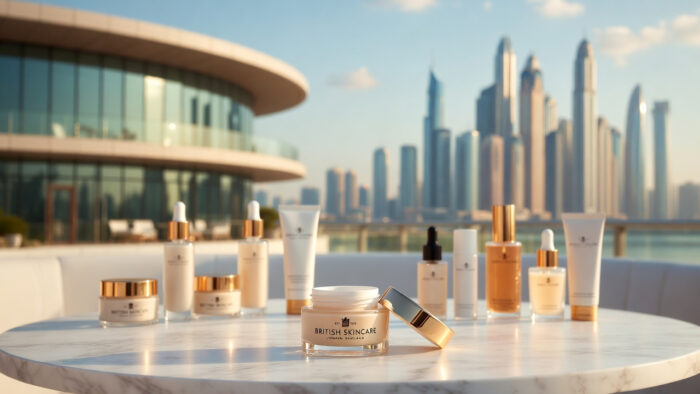
The demand is already visible — in luxury retail, hotel spas, and concept stores across the city. What turns that demand into revenue is structure. That’s why founders exploring business setup in Dubai are increasingly positioning their brands for the UAE from day one.
Dubai’s beauty market is not just large — it is selective. And British skincare, with its emphasis on clean formulations, transparency, and heritage, fits that selection criteria unusually well.
Why British skincare brands resonate in Dubai
Dubai’s beauty consumers are not casual buyers. They are informed, brand-aware, and willing to pay for quality.
The climate alone creates consistent demand. High temperatures, humidity, and constant exposure to air conditioning mean consumers actively seek hydration, barrier-repair products, and SPF-driven formulations. Skincare here is not just cosmetic — it is functional.
At the same time, the clean beauty movement has moved from niche to mainstream. Buyers increasingly look for products that are organic, cruelty-free, vegan, and free from harmful chemicals. British brands already lead in this space, often backed by certifications and transparent ingredient sourcing.
Heritage also plays a role. Products that tell a story — whether through botanical sourcing, laboratory formulation, or sustainability practices — perform strongly. In a market where consumers are exposed to global brands daily, authenticity becomes a differentiator. Embracing sustainable luxury is no longer just a trend; it is a core expectation for brands looking to establish long-term trust with discerning UAE customers.
Dubai’s multicultural population further strengthens demand. With consumers from Europe, the Middle East, Asia, and beyond, brands that offer diverse formulations and address multiple skin concerns have a broader addressable market.
How British skincare brands reach customers in Dubai
The route to market in Dubai is rarely singular. Successful brands typically combine multiple channels to build both visibility and revenue.
Retail remains one of the most visible entry points. Department stores, beauty chains, and concept retailers actively seek premium international brands. However, these buyers almost always require a locally registered supplier who can invoice in AED and manage stock within the UAE.
E-commerce is equally powerful. Dubai’s digital adoption is among the highest globally, with consumers comfortable purchasing beauty products online. British brands with strong direct-to-consumer strategies can build traction quickly. If you are planning a move to manage your launch in person, our Dubai travel tips will help you organize your initial trip like a pro.
Hospitality partnerships represent a third major channel. Luxury hotels, spas, and wellness centres regularly stock premium skincare for treatments and retail. For brands with clinical or spa-grade positioning, this creates recurring B2B revenue alongside brand exposure.
Pharmacies and health-focused retailers provide another pathway, particularly for products positioned as dermatological or science-led solutions. In these environments, trust, certification, and ingredient clarity become key drivers of purchase.
What compliance and product registration involve
Dubai’s beauty market is regulated, and compliance is not optional.
Every skincare product must be registered before it can be sold. This process is managed through Dubai Municipality, which reviews ingredients, safety documentation, packaging, and labeling.
For British brands, this is not as complex as it sounds. Many already comply with UK or EU standards, which align closely with UAE requirements. Safety assessments, ingredient lists, and quality certifications typically translate well into the local system.
The key difference is structural. Product registration must be completed through a UAE-registered entity or distributor. Without that local presence, even the most compliant product cannot be sold legally in the market.
Packaging also needs to meet local standards, including clear ingredient labeling and, in many cases, bilingual information.
While this adds an extra step, it also protects brands by ensuring that only compliant products reach consumers.
The Power of Going Local: Why a UAE Entity Matters
Many British skincare founders initially consider entering Dubai through a distributor. This can provide a quick route into retail, but it comes with trade-offs.
Distributors control pricing, positioning, and often the customer relationship. Margins are reduced, and the brand has less influence over how it is presented in the market. Establishing a local entity offers a different path.
With a UAE company, founders can register products directly, invoice retailers in AED, and manage both wholesale and direct-to-consumer channels. This provides greater control over pricing, branding, and customer data.
It also improves operational efficiency. Local invoicing reduces delays, simplifies transactions, and aligns with how retailers prefer to work.
Perhaps most importantly, a UAE entity enables regional expansion. Dubai acts as a hub for the wider GCC, allowing brands to scale beyond a single market into Saudi Arabia and neighbouring countries.
Photo by Galina Kolonitskaia
How to set up a skincare business in Dubai
For most founders, entering Dubai does not require relocating production or building large infrastructure immediately. The model is designed to be lean and scalable.
The process begins with selecting the right business activities. A skincare brand may require licensing for cosmetics trading, e-commerce, and retail distribution. Free zone structures allow multiple activities to be combined, giving flexibility as the business grows.
Company formation itself is straightforward. Through Meydan Free Zone, founders can establish a business entirely online using only their passport. The Fawri license model enables incorporation in under 60 minutes, creating the legal entity needed for contracts, banking, and compliance.
Once the company is set up, a UAE bank account allows the business to invoice locally and receive payments efficiently. Products can then be registered through Dubai Municipality, enabling legal sale across retail and online channels.
Operationally, most brands adopt a hybrid approach. Manufacturing remains in the UK, while products are shipped to UAE logistics partners for local distribution. The Dubai entity manages contracts, invoicing, and market expansion.
As sales grow, founders may add local staff, retail partnerships, or physical presence.
What a Meydan Free Zone setup enables
For British skincare brands, the advantage of a Meydan Free Zone entity is practical.
It removes the barriers that typically slow international expansion. Products can be registered directly, retailers can be invoiced locally, and the business can operate within the UAE’s commercial framework.
The structure supports flexibility. Founders retain full ownership, can combine multiple business activities under one license, and operate without committing to large overheads at the start.
Administrative support services handle compliance, renewals, and operational requirements, allowing founders to focus on product development and growth.
Financially, the setup is also attractive. Qualifying Free Zone income can benefit from favourable corporate tax treatment, and profits can be repatriated without restriction.
Conclusion
Dubai’s beauty market is not short of brands. What it continues to seek are products that combine quality, transparency, and authenticity.
British skincare already delivers on these attributes. Clean formulations, ethical sourcing, and strong brand storytelling align closely with what consumers in the UAE value most.
The opportunity is not hypothetical. It is already visible across retail shelves, spa menus, and online platforms.
What determines success is execution. Through Meydan Free Zone, founders can establish the structure needed to register products, access retail channels, and scale their brand in one of the world’s most dynamic beauty markets.
For British skincare entrepreneurs, Dubai is not just a new market. It is a platform for global growth.