
Kitchen countertops work hard every day, from chopping and cooking to coffee spills, hot pans and constant cleaning. If you’re planning a kitchen update, it’s worth looking beyond colour and price to consider how each material will perform over time. Quartz, granite, marble, quartzite and porcelain all have different strengths and maintenance requirements. Here’s how their typical lifespans compare, along with simple ways to keep your kitchen worktops looking good for longer.
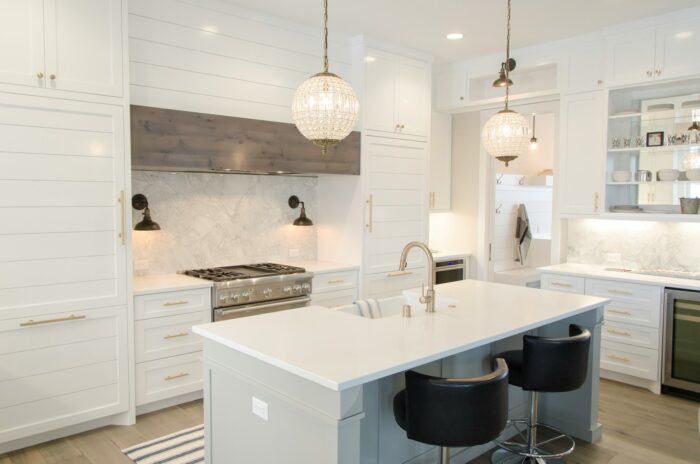
Photo by Aaron Huber
If you’re planning a complete kitchen update, my guide to designing a functional small kitchen also covers ways to make the most of your worktop, storage and layout.
How Long Do Different Countertop Materials Last?
Lifespan is just as important as appearance when choosing a countertop. The right material should be able to handle years of everyday use while fitting your preferred level of maintenance. Whether you are considering quartz, marble, or granite, understanding how each material performs over time can help you make a more practical choice.
Quartz (20 to 50 Years)
Quartz is an engineered surface made from crushed quartz minerals mixed with resin and pigments. This manufacturing process gives it a consistent appearance and a nonporous surface that does not require sealing.
With proper installation and everyday care, quartz kitchen countertops can last around 20 to 50 years. Their lifespan may be shortened by repeated exposure to high heat, harsh chemicals, or heavy impacts near the edges.
Granite (Over 50 Years)
No two granite countertops look exactly alike, which is part of their lasting appeal. Beneath those natural patterns is a hard surface that can stand up to years of cooking, cleaning, and general household activity.
Granite countertops often last several decades, and a well-maintained slab may serve a home for 50 years or more. Its actual lifespan depends heavily on the quality of the installation, particularly around seams and sink cutouts.
Marble (20 to 50 Years)
Known for its flowing veins and naturally varied surface, marble countertops give a kitchen a look that manufactured materials cannot fully reproduce. However, since it is more prone to scratching and acid etching, marble countertops tend to develop visible wear over time. Despite that, they can remain functional for around 20 to 50 years with proper care and occasional refinishing.

Quartzite (30 to 100 Years)
Quartzite can look similar to marble at first, but it performs very differently in a busy kitchen. This hard natural stone stands up well to everyday wear, making it one of the more dependable choices when durability is a priority. A well-made surface can remain part of the home for 30 years or more, sometimes considerably longer.
Porcelain (25 to 50 Years)
Porcelain countertops are made from refined clay and minerals that are fired at extremely high temperatures. The result is a dense surface that resists stains, scratches, and heat from everyday cooking. This makes porcelain a strong choice for anyone planning a kitchen renovation should also consider comparing heat-resistant kitchen countertops.
Most installations can remain functional for around 25 to 50 years, although exposed edges may chip if struck by heavy cookware.
| Material | Typical lifespan* | Main advantage | Main consideration |
|---|---|---|---|
| Quartz | 20–50 years | Low maintenance | Protect from extreme heat |
| Granite | 50+ years | Very durable | May require sealing |
| Marble | 20–50 years | Unique natural appearance | Prone to etching and scratching |
| Quartzite | 30+ years | Hard and durable | Sealing may be required |
| Porcelain | 25–50 years | Heat and stain resistance | Edges can chip |
Lifespans are general estimates and can vary depending on material quality, installation, use and maintenance.
Kitchen Countertop Maintenance Tips to Help Them Last Longer
The lifespan of a kitchen countertop depends on more than the quality of the material or installation. Daily habits also have a major influence on countertop durability, especially in busy kitchens where the surface is constantly exposed to moisture, heat, and impact.
1. Keep Sink Areas Dry
Water can collect around sinks, taps and countertop seams, particularly in busy kitchens. This is one reason protecting kitchen surfaces from moisture should extend beyond the visible countertop. Wipe these areas regularly and keep an eye on worn caulking to help prevent staining and moisture damage.

Image by @creatveight on Unsplash
2. Check Whether Natural Stone Needs Sealing
Natural stone doesn’t necessarily need to be resealed on a fixed schedule. Follow the manufacturer’s care instructions and periodically check whether the surface is absorbing water more readily than before. One simple test is to place a few drops of water on a clean, inconspicuous area. If the stone darkens quickly, the sealer may be losing effectiveness. If the droplets remain on the surface, resealing may not be necessary yet. When in doubt, ask the supplier or installer before applying a new product.
3. Protect Countertops From Heat and Steam
Use trivets under hot cookware and avoid positioning kettles, coffee machines and other steam-producing appliances directly beneath cabinets or against vulnerable seams. Sudden temperature changes can also stress some countertop materials. Clearing the counter before cooking makes spills easier to spot and reduces the chance of dragging appliances or containers across crumbs and grit. And if you’re planning a new kitchen, my guide to choosing the perfect kitchen gadgets can help you decide which appliances are worth making space for.
4. Clean Spills According to Their Staining Risk
Some spills can be wiped up when you finish cooking, while others should be handled right away. Ingredients such as turmeric, tomato sauce, wine, coffee, oil, and citrus juice can stain, discolour, or etch certain countertop materials. Marble is particularly sensitive to acidic liquids, and porous natural stone may absorb grease if it is not cleaned quickly. Use a soft cloth and the appropriate cleaner rather than scrubbing aggressively, which may damage the finish.
5. Avoid Thermal Shock, Not Just Direct Heat
A countertop may tolerate moderate warmth, but still crack or discolour when exposed to a sudden temperature change. Avoid placing frozen items on a recently warmed surface or setting a hot pan on an area that is cold or wet.
Final Takeaways
Choosing the right countertop is only the beginning. The way you clean, use and protect it every day will have a lasting effect on its appearance and performance. Whether you choose low-maintenance quartz, characterful marble or durable natural stone, a little regular care can help your kitchen worktop stay beautiful and functional for years to come. Keep an eye on small chips, stains and worn caulking, and deal with them before they become bigger problems.








[…] it’s also worth considering how different materials perform over time — my guide to how long kitchen countertops last compares the durability and maintenance requirements of popular […]