Colmar’s timber-framed streets look like they were pulled straight from a fairy tale, but its culinary scene is strictly down-to-earth: generous, warming, and heavily influenced by its position between France and Germany.
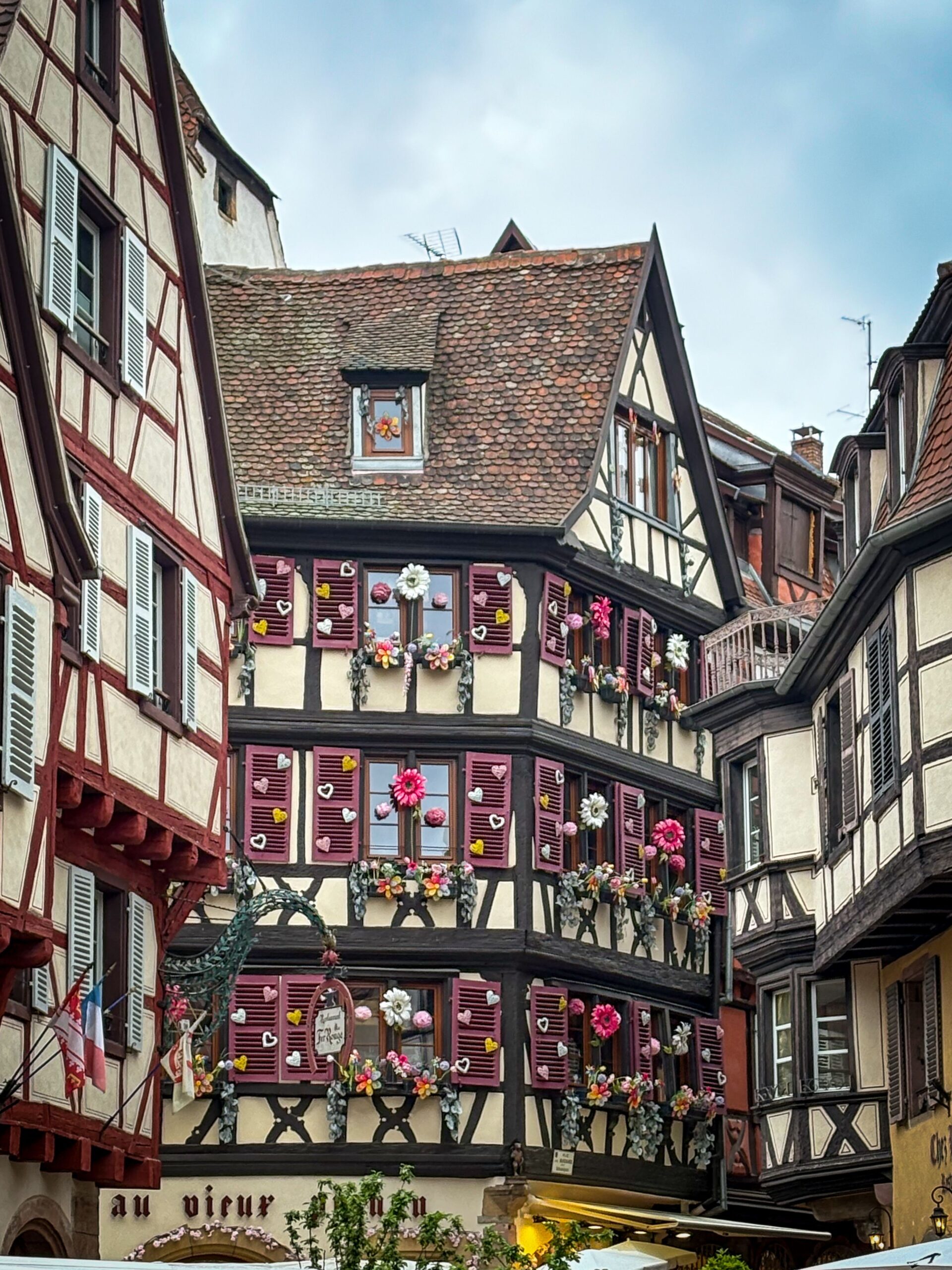
Photo by Magda Ehlers
Whether you are settling in at a cozy winstub for a multi-course feast or grabbing a quick bite on the go, navigating an Alsatian menu requires a bit of local know-how—especially if your idea of a classic French lunch is a light salad followed by a gentle stroll. Here is what to eat in Colmar, from crispy regional classics to essential bakery stops and market finds.
Tarte Flambée (Flammekueche): The Ultimate Shared Starter
With its thin base and topping of cream, fromage blanc, onions and bacon, tarte flambée is an easy introduction to Alsatian cooking. It also appears on menus as flammekueche, which is worth recognising before assuming you’ve found two different dishes.
The base is crisp and cooked quickly in a very hot oven. Sharing one makes sense, especially when there are other things on the menu you want to try. It’s eaten with your fingers, so this is a meal where reaching across the table is part of the arrangement. At the Christmas markets in Alsace—and often across the border in Frankfurt and Southern Germany—it is the ultimate hot, savoury bite to share standing up between wooden chalets.
Variations include cheese toppings, sometimes with local Munster, and sweet versions with apple. The traditional one is a useful starting point; a second order can be the experiment.
Despite the name, there’s no tableside performance with a bottle of spirits. The flame refers to the oven, not a waiter setting your lunch alight.

Winstub Classics: Baeckeoffe, Choucroute & Long Lunches
For something more substantial, baeckeoffe combines marinated meats and potatoes cooked in white wine. It’s the sort of dish that makes a bakery snack look like a very distant memory.
The appeal is fairly simple: a slow-cooked meal rather than something assembled just before serving. Alongside it, menus may include coq au Riesling, a regional version of chicken cooked in wine, or choucroute, the sauerkraut for which Alsace is well known.
A traditional winstub is one option for this kind of meal. These Alsatian wine taverns suit the food better than a hurried stop between photographs, though the menu matters more than how convincingly rustic the room looks. A few dishes you genuinely want to eat are a better reason to choose somewhere than a long list of regional specialities.
It’s also worth deciding whether lunch is the main meal of the day. Baeckeoffe followed by dessert leaves less appetite for an ambitious dinner.
Photo by Hub Jacqu
Alsatian Bakeries: Kougelhopf, Pretzels & Pain d’Épices
Kougelhopf is the cake to look out for, baked in a tall, ridged mould with a hole in the middle. The sweet version contains raisins, while savoury versions are also part of the Alsatian repertoire.
With coffee, it makes a different sort of stop from a full restaurant meal. There’s time to sit down, look at what else is in the bakery and reconsider whether you really need something to take away as well.
Pretzels are another regional favourite, useful when hunger arrives before lunch. Pain d’épices, the local gingerbread, offers something sweeter. A food-focused visit doesn’t have to mean ordering several courses every time you sit down.
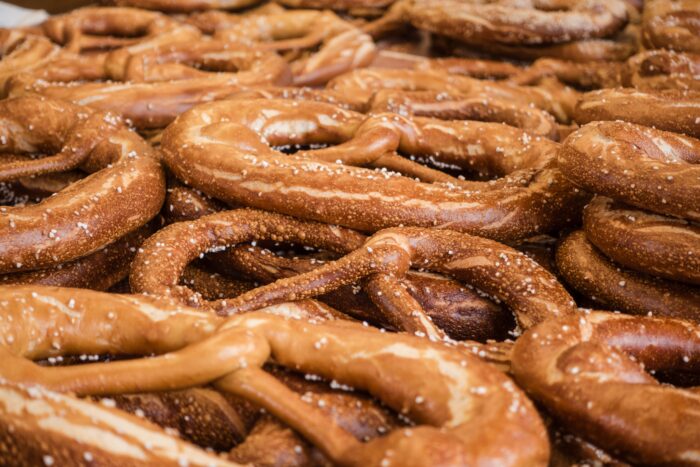
Photo by Hert Niks
Colmar Covered Market: Local Produce & Edible Souvenirs
Colmar’s covered market brings produce, cheese, charcuterie and bakery stalls together inside a brick building with a metal framework. It’s a good place to browse the ingredients behind the restaurant menus, or buy something smaller when another sit-down meal feels excessive.
Munster is among the regional cheeses to look for. Asking the seller about a milder or stronger example is more useful than choosing solely by the size of the piece, especially if you’re buying it for someone else.
Food shopping is easier without a suitcase following you between counters. Hotel bag storage or booked luggage storage in Colmar can help when a market visit falls between checkout and departure.
If you plan to take food home, tell the seller how you are traveling before paying. A cheese meant for a short ride home is very different from one that will spend six hours sweating in a warm backpack. If that sounds like too much administrative effort, a box from the bakery makes a far less temperamental souvenir—assuming it survives the train ride without you eating it all first.
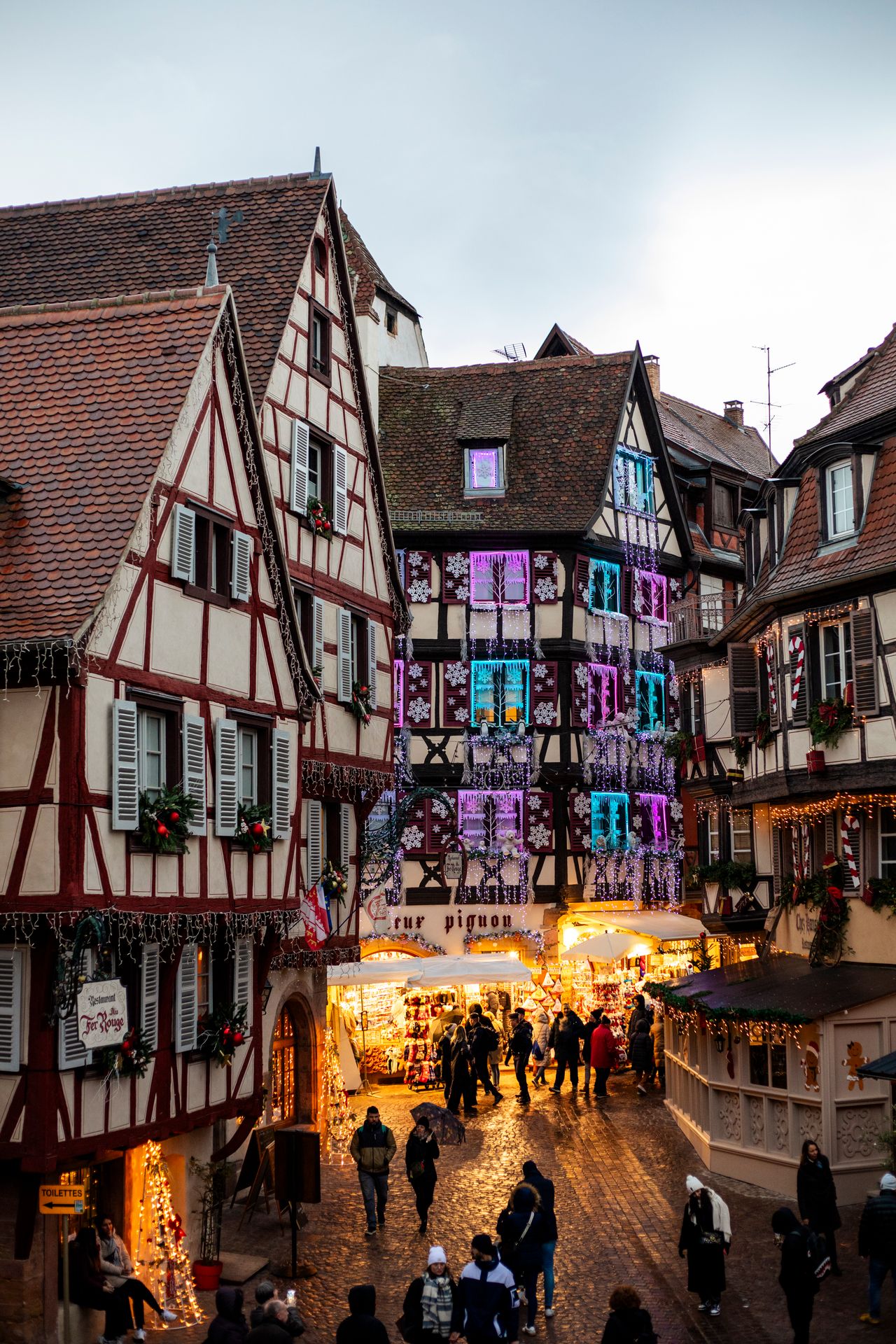
Photo by Caglar Aslan
Conclusion
Stepping into a cozy winstub for a leisurely meal or sampling your way through the covered market is all part of the charm—eating in Colmar is as much about slowing down as it is about the food itself. Take time to wander between bakeries, ask local stallholders for recommendations, and don’t be afraid to order unfamiliar dishes.
Just remember to pack a comfortable pair of walking shoes—and perhaps leave a little extra room in your bag for a loaf of pain d’épices or a wheel of local cheese for the journey home.
Heading elsewhere in France this winter? Read my practical tips on French Alps ski destinations.