Splitting a villa with friends used to mean awkward chore charts, arguments over bedrooms and someone inevitably hoarding the good pillows. Not anymore. Group travel has quietly shifted from a budget compromise into a design choice: fewer walls, more shared meals, and real conversations instead of hallway small talk.
A well-designed villa can give everyone enough privacy to have their own space while still creating the kind of shared holiday experience that’s difficult to get from a row of hotel rooms. Bali, with its abundance of private villas and relaxed indoor-outdoor living, is particularly well suited to it. The trick is choosing the right property — and agreeing on a few practical details before anyone books a flight.
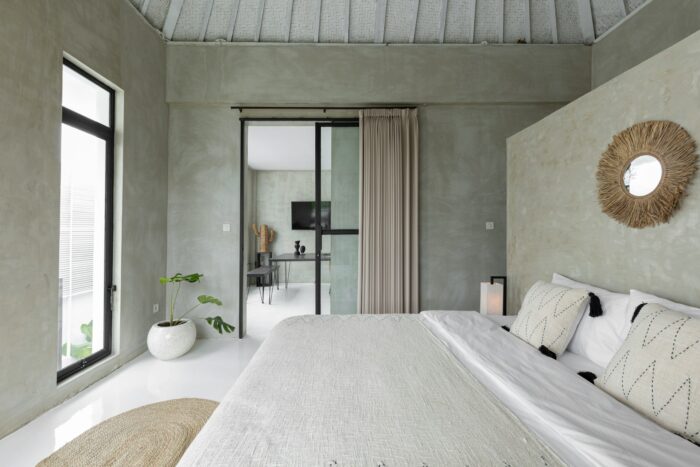
Photo by Marvin Meyer
How Many Bedrooms Do You Really Need?
Three people can feel cramped surprisingly quickly once someone wants an afternoon nap, another person is working remotely and a third has decided that 7am is the perfect time for a swim. Six or eight people, meanwhile, can start to feel like a hostel with better linens. Four bedrooms often hits the sweet spot: enough privacy that nobody feels they’re constantly stepping over someone else, but enough shared space that dinner, drinks and lazy afternoons still happen together. It’s why so many people scouting four-bedroom villas in Bali gravitate towards them almost by instinct rather than spreadsheet math.
A four-bedroom villa can work particularly well for groups of friends — but the number itself matters less than the layout. A villa with four bedrooms arranged around a central pool pavilion feels completely different from one where the rooms are scattered across separate buildings. Before comparing square metres or obsessing over the pool, look at how the bedrooms, bathrooms and communal areas actually connect. A good floor plan does some of the negotiating for you.
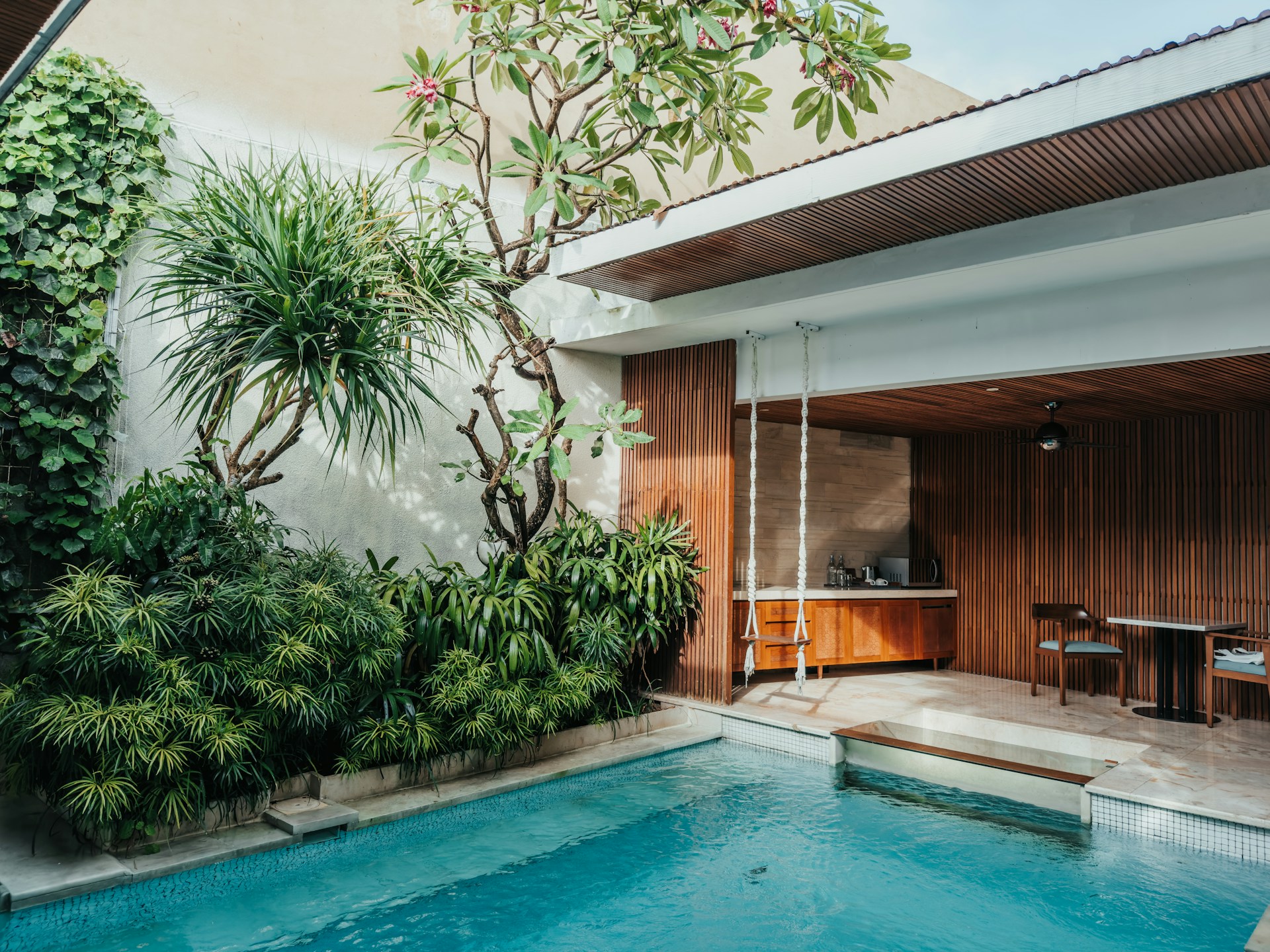
Photo by Shawn
The Villa Details Nobody Thinks About
Everyone talks about the pool. Almost nobody asks about the water pressure at 7:00 when four people are showering before an early yoga class. Or whether the Wi-Fi actually works when half the group is trying to make video calls. Or what happens when the electricity supply cuts out in the middle of someone’s afternoon nap.
These aren’t the details that make it into Instagram photos, but they’re exactly the things that can change the experience of a shared villa. Bali’s private villas vary enormously in how they handle utilities, staffing, connectivity and day-to-day maintenance, so it’s worth asking the property manager specific questions rather than relying on a generic list of amenities.
What to Sort Out Before Booking Your Bali Villa
The best group holidays tend to look effortless because someone dealt with the boring details beforehand. Before anyone pays a deposit, agree on a few basics:
- Who is responsible for the deposit, and what payment method does the property require?
- Is the villa fully self-catering, or does it include a cook or housekeeping staff?
- Will you need scooters, taxis or a private driver to get around?
- Has the Wi-Fi actually been tested? Ask for a recent Speedtest screenshot if anyone needs to work remotely.
- Are cleaning, staff fees and other charges included in the quoted price?
None of this sounds particularly exciting when you’re planning a holiday. But agreeing on the logistics before arrival means you can spend the first afternoon arguing over where to eat rather than who is supposed to pay the electricity bill.

Where to Stay in Bali With a Group
Bali isn’t one uniform destination, and choosing the right area matters even more when you’re travelling as a group. Someone will want good restaurants, someone else will want a beach nearby, and there’s always one person who has underestimated how long it takes to get anywhere in Bali traffic. I experienced this difference myself when I lived in Bali, where the appeal was as much about the everyday rhythm of the island as the classic holiday attractions. Uluwatu, Canggu, Seminyak and Ubud all offer very different versions of a group holiday.
Uluwatu: Best for Surfing and Coastal Views
Uluwatu is a strong choice for groups who want dramatic cliffs, beaches and a slower rhythm — particularly if surfing is part of the plan. The area’s famous breaks are highly dependent on tide conditions, so a day here tends to revolve around the ocean rather than a rigid sightseeing itinerary.
The trade-off is accessibility. Some clifftop villas look wonderfully secluded on a map, but reaching the beach can involve steep paths and a serious number of steps. That’s worth considering if everyone in the group isn’t equally enthusiastic about surfing, swimming or spending the day outdoors. A beautiful villa doesn’t compensate for being inconvenient for half the group.

Canggu and Seminyak: Better for Convenience
Canggu and Seminyak trade some of Bali’s quiet for convenience. You’ll find a huge choice of cafés and brunch spots, as well as shops and beach clubs, making it easier to organise the practical side of a group holiday without getting into a car or scooter every time someone wants coffee.
Canggu can be particularly useful if one or more people are working remotely, although the area’s popularity comes with traffic and noise. Seminyak, meanwhile, is a more established base, with plenty of accommodation, restaurants and shopping within easy reach. Neither is the place to book if your dream is complete silence, but both make group logistics considerably easier.
Ubud: Best for Culture, Nature and Slower Days
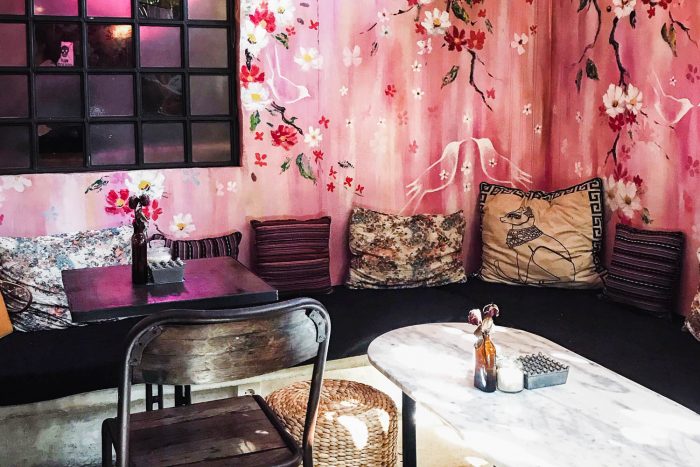
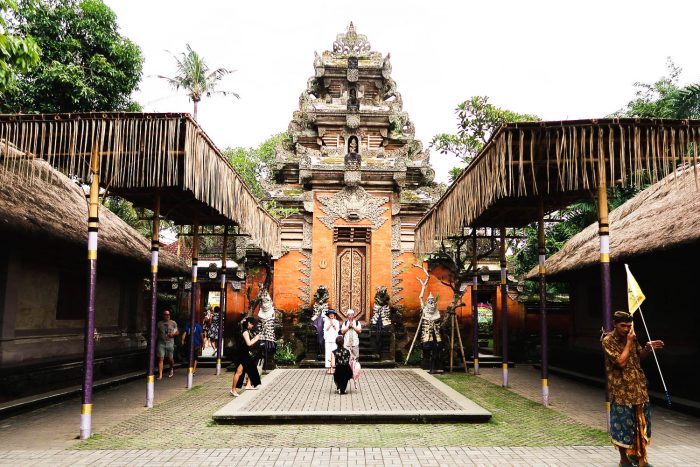
Ubud suits groups who want their Bali holiday to revolve less around the beach and more around food, culture and nature. The town and surrounding villages offer an easy mix of restaurants, cafés, yoga studios, rice terraces and temples, while the lush landscape makes a private villa with a pool feel particularly inviting. It can also work well for a group with different ideas of what a holiday should look like: one person can spend the morning at a yoga class, another can explore the local food scene, and someone else can simply stay by the pool with a book. The trade-off is transport. Ubud’s centre can get busy, and many of the most beautiful villas sit outside town, so having a driver or arranging taxis is often more practical than relying on walking or scooters.
Bali Visa Rules for Longer Stays
If your group is planning to stay in Bali for more than a month, don’t assume everyone can simply extend their visa at the last minute. Indonesia’s B1 Visa on Arrival (VoA) allows an initial stay of up to 30 days and can be extended once for another 30 days, giving a maximum stay of 60 days. For e-VoA holders, the extension can be initiated online through Indonesia’s immigration system, although the process may still involve an immigration-office appointment.
Visa rules and eligible nationalities can change, so check the official Indonesian immigration website before booking a long stay. For a group sharing a villa, it’s sensible for everyone to check their individual requirements at the same time rather than leaving one person to discover a problem after everyone else has arrived. Visa information checked August 2026.

Photo by Levi Ventura
How to Split Costs Without Starting an Argument
Splitting a villa sounds simple until the spreadsheet becomes more complicated than the holiday itself. Different arrival dates, restaurant bills, groceries, airport transfers and staff tips can turn a relaxed group into a surprisingly efficient accounting department.
The easiest solution is to agree on the system before you arrive. Decide what goes into the shared pot, who pays for the initial booking and how quickly everyone needs to reimburse the person who puts money down.
- One person books, everyone transfers their share before arrival — not after
- Groceries and household costs go into a shared kitty, refreshed weekly
- Cleaning fees and staff tips get built into the total upfront, not negotiated at checkout
None of this is glamorous. It is also the difference between a group trip people happily repeat and one that quietly ends a friendship.

Nasi Campur at a local warung in Ubud, Bali
The Secret to a Successful Group Villa Holiday
Done well, sharing a villa isn’t about cramming more people under one roof to cut costs. It’s about designing shared time on purpose. You want a kitchen big enough for two people to cook without constantly bumping into each other, enough bathrooms that nobody is queuing at 8am, a pool where everyone naturally gathers, and bedrooms positioned so that going to bed early doesn’t mean ending the evening for everyone else.
Get those fundamentals right and the rest becomes much easier. People can disappear for an afternoon, work for a few hours, cook together, meet by the pool at sunset or simply close their bedroom door and have some time alone. That’s the real advantage of a good group villa: you’re travelling together without having to do everything together.
And ultimately, that’s what makes the arrangement work. The best shared holidays aren’t the ones where everyone follows the same schedule. They’re the ones where there’s enough space — physically and socially — for everyone to enjoy the trip in their own way.