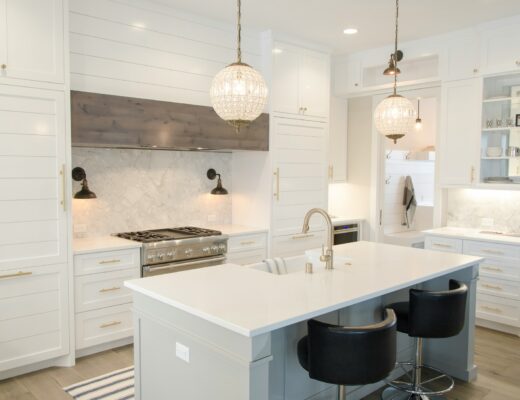
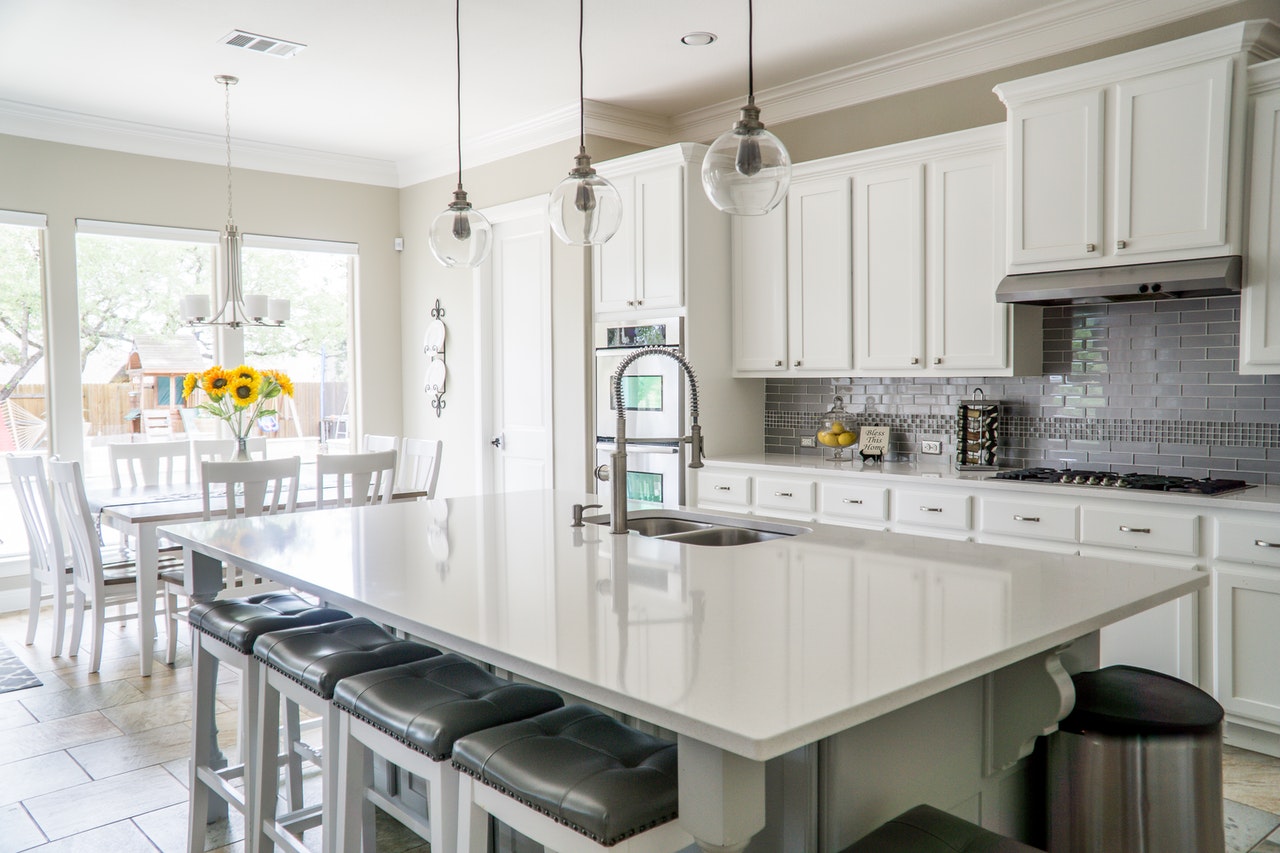
Modern kitchens are no longer simply places to prepare meals. They have become social spaces for cooking, entertaining, morning coffee and everyday life, which means atmosphere matters almost as much as functionality. If your kitchen feels a little too clinical or neutral, you don’t necessarily need a complete renovation to change it. Brass hardware, lighting and fixtures can introduce warmth and character with relatively small changes, adding a considered, luxurious feel without overwhelming the room. The key is knowing where to use it, which finish to choose and how to balance it with materials such as stone, wood and darker metals.
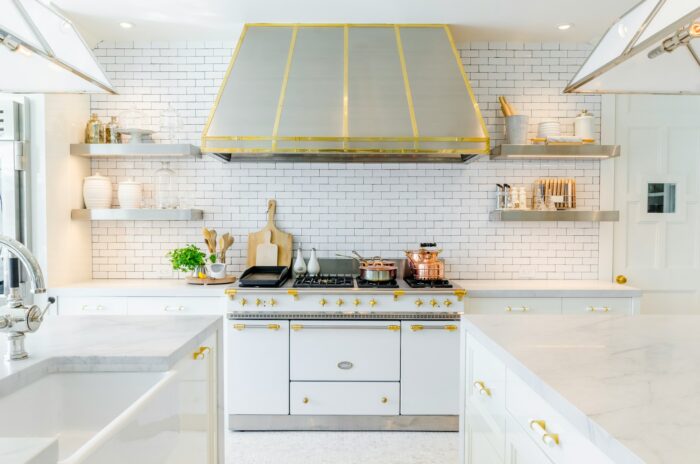
Photo by Chastity Cortijo
Why Brass Works So Well in Modern Kitchens
After years of cool grey, white and stainless-steel kitchens, warmer finishes are bringing a softer, more characterful feel to contemporary interiors. Brass fits naturally into this shift, adding warmth while retaining the elegance associated with metal.
Use Brass as an Accent Rather Than Covering the Kitchen
Luxury interiors rarely need to shout. Often, one or two carefully chosen details have more impact than filling a room with decorative features. In a kitchen, brass can be introduced through:
- Cabinet handles and knobs
- Kitchen taps and hardware
- Pendant lights
- Open shelving
- Shelf brackets
- Backsplash details
- Decorative accessories
- Statement range hoods
The advantage of using brass in this way is that you can create visual interest without committing to an entire metallic kitchen. A brushed brass tap against a stone worktop, for example, can be enough to soften an otherwise monochrome kitchen.
Statement Features Can Create A Strong Focal Point
Some kitchens benefit from taking brass beyond small accessories and using it for a major architectural or functional feature. A statement range hood, an oversized pendant light, or distinctive backsplash can establish a visual focal point while giving the room a more customized appearance.
For example, a brushed brass range hood can introduce warmth above the cooking area while turning an otherwise purely functional feature into a focal point. Good kitchen ventilation also helps remove cooking pollutants, moisture and odours, so a range hood should be considered for its performance as well as its appearance.
Brass Pairs Naturally With Stone
One reason brass has become so versatile in kitchen design is its ability to complement popular natural materials. Marble, quartzite, granite, and engineered stone countertops can all benefit from the contrast created by warmer metallic accents.
White or cream stone combined with brass creates a bright, refined look that often appears in luxury hotels and upscale restaurants. Darker stone can produce an equally sophisticated effect, particularly when brass is used sparingly to provide contrast against black, charcoal, or deep brown surfaces.
Veined stone can be particularly effective, as its natural variation prevents the kitchen from looking overly uniform while softening the precision of metallic fixtures. Marble, quartzite, granite and engineered stone countertops can all benefit from the contrast created by warmer metallic accents. If you’re choosing a new worktop, it’s also worth considering how different materials perform over time — my guide to how long kitchen countertops last compares the durability and maintenance requirements of popular options.
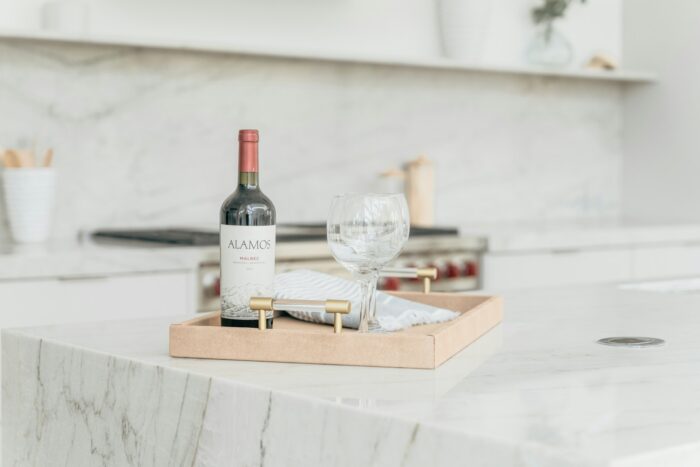
Photo by Stephen Olmo
Wood And Brass Create Natural Warmth
Wood is another material that works particularly well alongside brass. Both have warm visual qualities, but their different textures prevent the combination from feeling repetitive.
Light oak cabinetry paired with understated brass hardware can create a relaxed contemporary kitchen, while darker walnut and brass often produce a richer and more dramatic appearance. Reclaimed or heavily grained wood can also work well when the goal is to create an interior inspired by rustic restaurants, European cafés, or boutique hotels.
This pairing is particularly useful in open-plan homes where the kitchen needs to connect naturally with dining and living areas. Repeating wood tones and subtle brass accents throughout adjoining spaces can establish continuity without making every room look identical.
Different Brass Finishes Create Different Moods
Not every brass surface has the bright, polished appearance traditionally associated with the material. Modern finishes provide considerable flexibility, allowing homeowners to choose an effect that suits the character of their kitchen.
Brushed and satin finishes tend to feel understated and contemporary because they diffuse reflections and create a softer surface. Polished brass provides greater visual impact, while aged and antiqued finishes can introduce character that works particularly well in traditional, farmhouse, industrial, and vintage-inspired kitchens.
The surrounding materials should help determine which finish works best. A minimalist kitchen may benefit from subtle brushed metal, whereas a richly detailed space can often accommodate something darker, aged, or more decorative.
Lighting Makes Brass Details More Effective
Kitchen lighting influences how every colour and material in the room appears, but metallic surfaces are particularly responsive to changes in illumination. Brass can look dramatically different under bright natural daylight compared with warm evening lighting.
Pendant lights positioned above an island can highlight brass fixtures and create attractive reflections across nearby surfaces, while under-cabinet lighting can emphasise hardware, taps, shelving or metallic backsplash details.
Layered lighting is particularly effective when brass is part of the design scheme, allowing metallic details to change subtly from bright daytime accents to warmer evening highlights.
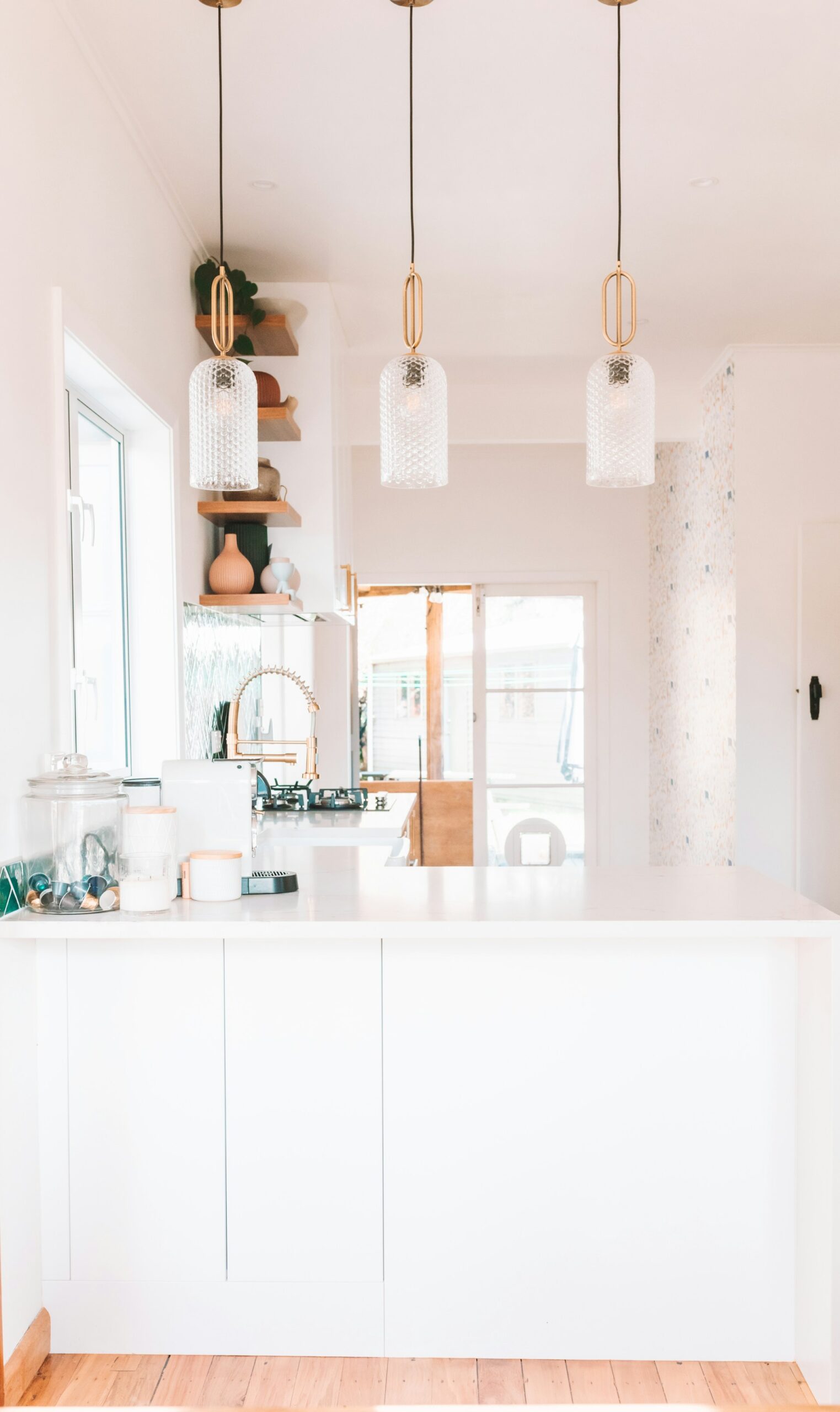
Photo by Callum Hill
Brass Works Across Different Kitchen Styles
Although brass is frequently associated with classic interiors, it can work surprisingly well across a wide variety of kitchen styles. The key is choosing the right amount, finish, and surrounding materials. From traditional farmhouse kitchens to sleek contemporary spaces, looking at kitchens from different cultures can also be a useful source of inspiration. My guide to kitchen designs from around the world explores some of the different ways kitchens combine materials, colours and architectural details.
In contemporary kitchens, simple brass handles or streamlined fixtures can soften sharp architectural lines. Farmhouse kitchens can use aged brass alongside painted cabinetry and natural wood, while industrial spaces can combine darker brass finishes with exposed brick, concrete, and black metal.
Even highly minimalist kitchens can incorporate brass successfully. A single statement fixture may provide enough contrast to prevent a restrained neutral interior from appearing cold or impersonal.
How to Introduce Brass Without Renovating the Whole Kitchen
You don’t need to redesign an entire kitchen to introduce brass. Replacing cabinet handles, updating a tap or adding brass pendant lights can instantly bring warmth and character to an existing space.
For a stronger statement, consider a brass range hood, backsplash or shelving detail as a focal point. Brass also works well alongside stainless steel, black metal and bronze, so there is no need to match every finish perfectly.
The key is restraint: repeating brass in two or three carefully chosen areas can make the design feel cohesive without overwhelming the room.
Creating A Kitchen That Feels Timeless
Unlike highly specific colour trends, brass has a long history in architecture, furniture, lighting and household objects, giving it a timeless familiarity that feels less tied to a particular design moment.
The most successful modern kitchens use brass thoughtfully rather than treating it as decoration that needs to appear everywhere. Whether introduced through understated hardware or a dramatic focal feature, its warmth and character can bring a subtle sense of luxury to the room while helping create a kitchen that feels inviting, distinctive, and designed to last.
If you’re considering a larger update, it’s worth thinking about the overall layout and functionality before choosing decorative finishes. My guide to kitchen renovation ideas for functional design covers practical ways to create a kitchen that works as well as it looks.