The Julian Alps form the southeastern extension of the Alpine chain, creating Slovenia’s most dramatic mountain landscapes. These limestone peaks, concentrated primarily in the country’s northwest corner, offer diverse hiking opportunities from valley walks to technical alpine routes. The range’s relatively compact area contains remarkable geological features, ecological diversity, and cultural significance.
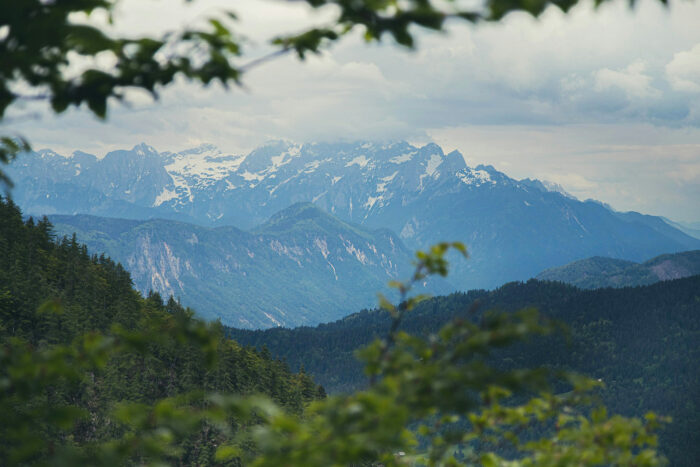
Photo by Kristóf Vizy
Geographic characteristics
The Julian Alps span approximately 4,400 square kilometers, with two-thirds lying in Slovenia and the remainder in Italy. The range stretches roughly 60 kilometers east to west and 40 kilometers north to south. Despite the modest footprint compared to western Alpine ranges, the Julian Alps rise dramatically—Triglav, the highest peak at 2,864 meters, dominates the region both physically and symbolically.
The limestone composition creates distinctive features. Vertical rock faces rise hundreds of meters from valley floors. Karst formations including caves, sinkholes, and underground rivers develop where water dissolves rock over millennia. Surface water drains quickly through porous limestone, creating dry valleys punctuated by occasional springs where underground streams resurface.
Glacial activity shaped current topography. The Pleistocene ice ages carved deep valleys and cirques visible today. The Triglav glacier, once extensive, has shrunk to a small remnant expected to disappear within decades. Evidence of past glaciation appears throughout the range—U-shaped valleys, moraines, and polished rock surfaces.
Triglav National Park
Slovenia established Triglav National Park in 1981, protecting 880 square kilometers of the Julian Alps. The park encompasses most of the high peaks, the Triglav Lakes Valley, and portions of several valleys. Management balances conservation with recreation and traditional land use by local communities.
Park regulations restrict development while allowing existing activities to continue. Mountain huts operate under special permits. Grazing rights in some areas maintain traditional pastoral landscapes. Collection of plants, camping outside designated areas, and off-trail hiking face restrictions aimed at protecting sensitive alpine environments.
The park attracts approximately 2.5 million visitors annually, with most concentrating in accessible areas like Lake Bohinj and the Vintgar Gorge. This concentration creates management challenges—trail erosion, waste disposal, and overcrowding at popular sites. Park authorities work to distribute visitors more evenly while protecting the most sensitive areas.
Key hiking regions
The Seven Lakes Valley (Dolina Triglavskih jezer) ranks among the most popular hiking destinations. This high glacial valley contains seven named lakes at elevations between 1,400 and 2,000 meters. The area requires substantial elevation gain from valley approaches but rewards with dramatic scenery and access to higher peaks. Mountain huts serve as bases for multi-day explorations.
The Soča Valley offers lower-elevation hikes through distinctive turquoise river gorges. The river’s unusual color results from limestone particles suspended in glacial meltwater. Trails follow the river through forests and along cliff edges, providing spectacular views without requiring alpine skills. These routes remain accessible from April through November.
The Krma Valley provides a classic approach to Triglav from the south. The valley floor hike passes through forest to open meadows with views of surrounding peaks. From the valley head, routes ascend to various mountain huts that serve as staging points for summit attempts. Slovenia hiking tours often incorporate this valley for its combination of accessibility and alpine character.
Mountain hut system
Approximately 60 mountain huts operate in the Slovenian Alps, with about 40 in the Julian Alps specifically. These huts range from small bivouac shelters with minimal facilities to substantial structures accommodating 100+ guests. Most operate from late June through September, with some lower-elevation huts extending seasons into October or opening in May.
Slovenian mountain huts traditionally offer simple accommodation—dormitory bunks, shared bathrooms, and communal dining. Recent renovations at many facilities have improved comfort levels while maintaining the basic structure. Hot meals, packed lunches, and beverages are available, allowing hikers to travel with lighter packs.
Hut etiquette follows general alpine conventions. Reservations are increasingly necessary at popular huts during peak summer months. Hikers remove boots before entering sleeping areas. Quiet hours after 22:00 respect others’ rest. The communal nature of hut stays creates social interactions between hikers from various countries.
Technical routes and via ferratas
The Julian Alps offer numerous via ferrata routes—protected climbing paths using fixed cables, ladders, and iron rungs. These installations allow non-climbers to access vertical terrain with proper equipment and basic skills. Routes range from easy introductory paths to extreme technical challenges requiring climbing experience.
Via ferrata equipment consists of a climbing harness, shock-absorbing sling, and two carabiners. Rental options exist in gateway towns, though many regular users purchase personal equipment. Guided trips provide instruction for beginners while showing experienced users challenging routes.
Traditional climbing routes on Julian Alps walls attract international climbers. The north face of Triglav features classic multi-pitch routes. Rock quality varies—some areas offer solid limestone, while others require caution with loose rock. Climbing season typically runs June through September, though weather determines actual conditions.
Cultural significance
Triglav holds special meaning in Slovenian national identity. The peak appears on the national flag and coat of arms. Climbing Triglav represents a rite of passage—the saying goes that you’re not truly Slovenian until you’ve stood on the summit. This cultural importance means the peak sees extremely heavy traffic during summer, with hundreds attempting it daily during prime season.
The mountain’s name derives from Slavic mythology, meaning “three-headed” and referring to a three-headed deity. This pre-Christian significance adds historical depth to the mountain’s modern role as a national symbol. The combination of mythology, history, and natural prominence creates powerful cultural resonance.
Traditional mountain practices continue in some areas. Alpine pastures (planina) in the Julian Alps support seasonal grazing and cheese making. Shepherds move herds to high pastures in June, returning to valleys in September. This maintains cultural traditions while creating the open alpine meadows many hikers enjoy.
Wildlife and ecology
The Julian Alps support diverse wildlife despite heavy human visitation. Chamois frequently appear on rocky slopes above treeline. Ibex populations, reintroduced after local extinction, now inhabit higher elevations. Marmots whistle warnings from boulder fields. These ungulates and rodents constitute the most commonly observed mammals.
Large predators including bears, wolves, and lynx inhabit the region, though encounters remain rare. Bears occasionally appear near mountain huts attracted by food waste or improperly stored supplies. Park authorities promote proper food storage and waste disposal to minimize conflicts. Most hikers never see large predators despite their presence.
Vegetation zones follow typical alpine patterns. Deciduous forests dominate lower elevations, transitioning to conifers. Dwarf pine (Pinus mugo) creates dense thickets near treeline. Alpine meadows above treeline feature specialized plants adapted to short growing seasons and harsh conditions. Endemic species found nowhere else occur in limited areas.
Access and gateway towns
Bled serves as the primary tourist gateway to the Julian Alps. This lakeside town offers full services, accommodations, and transportation connections. Its proximity to Triglav National Park makes it a logical base for hiking trips. However, the town’s tourist popularity means higher prices and crowds during summer.
Bohinj presents a quieter alternative with direct access to the park. The lake and surrounding valleys provide immediate hiking opportunities. Cable cars from Vogel and other locations give quick access to higher elevations. The area maintains more of a local character compared to Bled’s international resort atmosphere.
Kranjska Gora in the northwest serves as another access point. This ski resort town provides year-round facilities and direct access to the Tamar Valley and other hiking areas. Its location near the Italian and Austrian borders makes it convenient for international visitors arriving overland.
Seasonal considerations
Summer from July through August offers the most stable weather and full mountain hut operations. However, this peak season brings crowds and higher prices. Popular routes and huts require advance planning and reservations. Afternoon thunderstorms occur frequently, requiring morning starts for high-elevation objectives.
June and September provide advantages—fewer people, moderate temperatures, and generally good conditions. However, snow may linger at high elevations in June, and some huts operate limited schedules. September brings autumn colors to forests and meadows, creating spectacular scenery, but shorter days and less predictable weather.
Winter conditions make most Julian Alps routes inaccessible without specialized equipment and mountaineering skills. Avalanche risk, deep snow, and extreme cold limit activity to experienced winter mountaineers. A few lower-elevation trails remain accessible for snowshoeing.
Environmental challenges
Erosion from heavy trail use affects popular routes. The Triglav summit trail shows particularly severe wear. Park authorities implement trail hardening measures, constructing stone steps and drainage systems. However, maintenance struggles to keep pace with increasing visitor numbers.
Climate change impacts appear in multiple forms. The Triglav glacier’s rapid decline represents the most visible change. Permafrost melt destabilizes some routes. Changing precipitation patterns affect water availability. Plant communities shift as temperature zones move upward. These changes will continue reshaping the range’s character in coming decades.