There is a persistent tension in modern travel: the desire to document an experience versus the primal need to actually live it. Whether standing in a vibrant Moroccan souk in Marrakech, watching the mist settle over the Scottish Highlands, or seeing the sun dip below the Adriatic, the instinct is often to reach for a smartphone—effectively placing a screen between the traveller and the world. This “phone fumble” often means that by the time a camera is ready, the authentic feeling of the moment has already begun to fade.
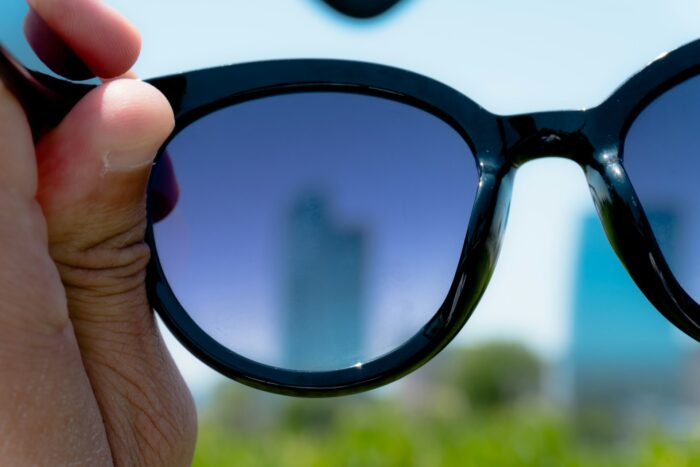
Photo by Zulfugar Karimov
A phone can pull a traveller out of a place even while attempting to capture it. However, as the travel landscape evolves in 2026, the concept of AI smart glasses is emerging as a bridge between these two worlds. As mindful photography advocates have long argued, the process of capturing a moment matters just as much as the image itself. By moving the camera from the hand to the eye, it becomes possible to capture the essence of a journey without sacrificing presence, turning documentation into a natural extension of exploration rather than an interruption.
What Actually Changes with Smart Glasses
The premise is simple, but the shift it creates is surprisingly profound. Rather than reaching for a phone every time something catches the eye, the traveller is already looking at it. The camera is aligned with the gaze. A tap on the frame, and the moment is captured. There is no unlocking, no framing delay, and no disappearing behind a screen.
For street photography, this is transformative. The best travel images are often the ones that feel unposed — a candid expression, the way light falls on a doorway, or someone laughing at a table across a piazza. These are the shots that are almost impossible to get when visibly raising a phone. With smart glasses, the photographer remains just a person looking at the world.
The same logic applies to experiences where using a phone is simply impractical or inappropriate — hiking a ridge with both hands occupied, sitting in a quiet chapel, or watching wildlife at dusk. The glasses allow those moments to be held without interrupting them.
The New Creative Workflow
Integrating smart glasses into a journey changes the rhythm of a trip, allowing for a more fluid creative process. For a short getaway where every shot counts, the glasses handle the spontaneous, “in-between” moments, while a dedicated camera remains the tool for composed, high-resolution storytelling. Before embarking on a city break, consulting the essential travel photography checklist for a European weekend can help strike the perfect balance between high-tech convenience and a structured approach to capturing a destination. This hybrid method ensures that while the photographer stays present, no essential memory is missed.
The AI Component
Beyond photography, what makes the newer generation of these smart glasses genuinely interesting for travellers is the built-in AI assistant. Features now include hands-free assistance and landmark recognition—all without touching a phone. It is the kind of frictionless access to information that enhances exploration rather than replacing it with screen time. For those who prefer to wander with loose plans rather than rigid itineraries, having this kind of ambient intelligence available fits the style of slow travel beautifully.
Design and Aesthetics of Smart Glasses
One surprising aspect of this technology is how much the design has evolved from a clunky tech-wear aesthetic. Collaborations like the one between Ray-Ban and Meta have produced something that genuinely sits in the lineage of classic eyewear — the Wayfarer or Headliner shapes — rather than a gadget.
Part of what makes travel photography rewarding is not drawing attention to the act of photographing. Looking like one is simply wearing a nice pair of sunglasses is a genuine advantage. The range has expanded significantly, and for those curious about what is available, the full Ray-Ban Meta collection offers various styles and lens options, including prescription—a genuine benefit for those who would otherwise be juggling multiple pairs of glasses on a trip.

Photo by Joy Marino
Technical Considerations
While the convenience of wearable tech is a significant shift, it is important to maintain realistic expectations. Battery management requires planning for a full day of exploration. The photo quality, while solid for a wearable and improving with each generation, is not intended to replace a dedicated camera for considered, composed travel photography. Low-light performance and fixed focal lengths remain limited compared to high-end sensors. While smart glasses excel in daylight, those looking to capture the brilliant night skies of the desert or the mountains will still find that specialized astrophotography techniques and traditional sensors remain the gold standard. Finally, there is an inevitable adjustment period in learning when to use the glasses and when to reach for a traditional camera.
However, the technology excels at capturing the “in-between” moments. These are the ones often missed because getting a phone out felt like too much effort or was too intrusive. Those are often the truest records of a trip — the small, unguarded instants that remind a person how it actually felt to be somewhere.
A Different Way of Seeing through Smart Glasses
There is something fitting about the idea that a pair of smart glasses — the tool used to see the world — could also become the tool used to remember it. Not instead of being present, but as an extension of it. It reconciles the photographer with the traveller who wants to put the camera down and just be somewhere. Documentation feels less like an interruption and more like a natural part of moving through a place.