
Dubai is a city that seems to have been designed through a viewfinder. It is a place where you can fumble your settings, lose track of time, or arrive slightly travel-worn, yet still walk away with a frame that belongs on a magazine cover. From the unapologetic ambition of its glass-and-steel heights to the weathered textures and warm, human rhythms of the historic districts, the city is a masterclass in contrast.
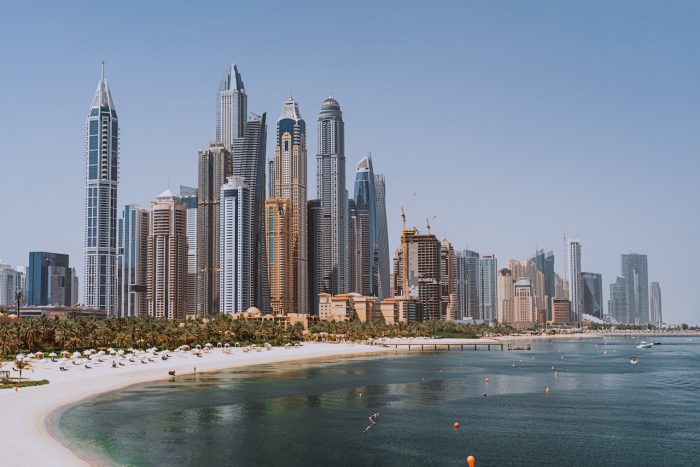
Photo by Denys Gromov
This guide is for those with a camera as their primary companion (even if that camera is the one in your pocket). We’re looking past the polished surface to find the true character of the city, offering a location-first roadmap on where to stand, when to catch the light, and how to navigate the architectural “clutter” to find that one perfect, minimalist shot.
The Golden Hour: Understanding Dubai’s Light
The light in Dubai is an atmospheric event. Because of the fine desert sand suspended in the air, the sunrise doesn’t just hit the city; it diffuses through it.
-
Sunrise (The Opalescent Window): This is the best time for exploring Dubai Downtown and the Marina. The light is soft, the crowds are non-existent, and as the sun clears the Arabian Gulf, the city takes on a metallic, hazy gold.
-
The Midday Haze: Midday light can be harsh and unforgiving on the pale stone of the souks. I usually use this time to scout locations or duck into the Museum of the Future, where the architecture provides its own shadow play.
-
Sunset & Blue Hour: This is when Dubai feels electric. The windows begin to glow, and the water picks up neon reflections. It requires patience, as this is also when the city is at its busiest.

What to pack for a photography trip (minimal, real-life kit)
- Wide lens: for architecture, interiors, big skyline scenes
- Short telephoto (50–85mm equivalent): for portraits, compressed city layers, clean framing
- Tripod (optional): useful for night and fountain movement
- Polarizer (optional): helps with glare on glass and water, though it can look uneven on wide skies
- Microfiber cloth: Dubai dust + fingerprints = constant fight
- Extra battery or power bank: photo days drain everything
- Phone-only? Totally fine. Focus on timing and composition. Light is doing half the work.
Framing the Skyline: From Land and Water
Dubai’s architecture is all about leading lines and stacked layers. To get a fresh perspective, you have to change your elevation and your element.
The Marina and Bluewaters
The Marina waterway curves beautifully, allowing the towers to “lean” into your frame. I love walking the bridges along the Marina Walk for symmetrical shots. For a cleaner, more minimalist vibe, head over to Bluewaters. The open space and modern energy there offer a perfect backdrop for portraits where you want the architecture to feel like a whisper rather than a shout.
Lens notes:
- Wide shots look epic, but they can also get messy if you include too much signage
- A short tele cleans everything up, turning chaos into neat layers
Shot list idea:
- Water reflections with a low angle (kneel if you must)
- A single boat silhouette with towers behind it
- Night frames with long exposure if you have a tripod
- Quick portrait shots with neon bokeh
- Bluewaters adds a slightly different mood: open space, modern vibe, and big landmark energy. If you like clean backgrounds for portraits, this area is a gift.
Perspectives from the Water
From land, Dubai can feel crowded. From the water, the city finally gets room to breathe. I always suggest booking a luxury yacht charter in Dubai for a golden hour session. When you are out on the water, the Marina towers become a “wall of glass” behind you, and the Palm coastline reveals its true scale.

Photo by Ling Tang
Downtown: Beyond the Icons
The Burj Khalifa is likely the most photographed building in the world, so the goal isn’t to reinvent it—it’s to shoot it with taste.
Instead of a wide-angle shot that captures every tourist in the frame, try a tighter crop. Use a short telephoto lens to frame just a section of the spire against the afternoon haze. Look for reflections in the glass panels or the polished surfaces of Souk Al Bahar. If you’re at the Dubai Fountain, play with your shutter speed: a fast shutter freezes the water into crisp droplets, while a slow shutter turns the fountain into a silky, abstract ribbon of light.
Shot ideas:
- Use a short tele and frame only a section of the tower with clouds or haze behind it
- Shoot reflections: glass panels, puddles after fountain spray, polished surfaces
- Focus on details: patterns, textures, the way lines converge
- Wide shots can work, yet they often include too many tourists, too many signs, too many distractions. Tight framing is your friend here.
- Dubai Fountain zone (movement, timing, lens choices)
- Fountain shots can look cinematic, or they can look like a random splash scene with zero story. Timing matters.
- Fast shutter (1/500 and up): freezes droplets and gives crisp water texture
- Slow shutter (1/5 to 1 second): turns water into silky motion, more abstract
The Texture of Old Dubai
For a complete contrast to the “Future-Forward” aesthetic, you must get around Dubai and the Al Fahidi historical neighbourhood. Here, the palette shifts to warm ochres and dusty browns.
-
Al Fahidi: Slow down and focus on the details—carved wooden doors, the shadow patterns in narrow lime-plastered lanes, and the iconic wind towers.
-
The Creek: Riding an abra (a traditional boat) across Dubai Creek is a sensory must. It offers a layer of “real” life: the motion of the water, the market energy, and the stacked city elements in the distance.

Shot ideas:
- Close-ups of door handles and carved wood
- Light-and-shadow patterns in narrow lanes
- Wide alley frames with a single person walking through
- Warm-toned portraits against textured plaster
- Early morning light works well. Midday can be harsh, but harsh can also look bold if you lean into contrast.
Future-Forward Architecture: Sharp Lines & Graphic Frames
In a city that feels like a blueprint of the future, the architecture demands a disciplined eye. Here, the beauty lies in the geometry and the interplay of light on glass and steel.
-
Museum of the Future: This is arguably Dubai’s most poetic landmark. The bold, torus shape and intricate Arabic calligraphy create a “hero shot” that feels both futuristic and deeply rooted in heritage. Arrive early to avoid the bustle of crowds and traffic. For the best results, use a low angle to emphasize the massive curves, or use a short telephoto lens to capture the graphic texture of the script as a minimalist detail.
-
DIFC & Gate Avenue: For a more “street-style” aesthetic, the Financial District offers a polished, metropolitan backdrop. I love visiting in the late afternoon when the sun casts dramatic, hard-edged shadows against the modern towers. It’s the perfect spot for minimal portraits with strong structure—ideal for when you want a sophisticated “photo win” without traveling far from the city center.
Coastal Frames: Bright, Airy, and Minimal
Dubai’s shoreline offers a refreshing contrast to the city’s vertical intensity. Here, the light is at its most expansive, and the compositions lean toward a clean, sun-drenched minimalism.
- JBR Beach: This is a study in scale, where the vast sea meets a towering skyline. Arrive just after sunrise for quiet, “magazine-style” frames. If you’re there in the afternoon, lean into lifestyle shots of people in motion, but keep your horizons perfectly straight; the eye immediately catches a tilted sea.
- Kite Beach: For a shot with more energy, Kite Beach is a gift. The sky is often punctuated by vibrant kites, providing natural color and movement. It is the perfect spot for candid portraits—let the coastal wind add a sense of life to hair and fabric.
- Umm Suqeim & Burj Al Arab: To make this icon feel personal, avoid the standard tourist snap. Try shooting the building small in the frame with plenty of negative sky, or use a long lens to compress it against the coastline. If the tide is out, look for shallow pools of wet sand for a crisp reflection shot.

Dubai After Dark: Neon, Reflections, and Electric Energy
When the sun sets, Dubai transforms into a high-contrast playground of light. The city’s second life is best captured with a steady hand and an eye for how light interacts with water and glass.
-
The Marina at Night: There is a wonderful, rhythmic chaos to the Marina after dark. The water becomes a dark mirror for the humming skyline, offering endless opportunities for reflection shots. If you don’t have a tripod for long exposures, brace your camera against a promenade railing to capture the neon glow of passing boats or sharp silhouettes against the illuminated towers.
-
Downtown Night Scenes: Downtown is visually loud, so the secret to a sophisticated shot is discipline. Instead of trying to capture everything, strip your composition down to a single story. A tight crop of a building’s glowing geometric patterns or the fluid light trails of traffic against the Burj Khalifa creates a much stronger, more intentional image than a crowded wide shot.
The Cinematic Desert
No photography trip to the UAE is complete without the dunes, so rent a car in Dubai and go! Desert photography is a study in shape and shadow. As the sun sets, the ridges of the dunes become sculptures. I find that a long lens works best here; it compresses the dunes, making the landscape feel vast and dramatic. If you place a subject on a distant crest, you can capture a striking silhouette against the burning orange sky.

A Note on Photography Manners
Dubai is incredibly welcoming, but street photography still requires a gentle touch. Always ask before taking a close-up portrait in the souks, and stay respectful of private spaces. The best photos usually come when you are relaxed and connected to your surroundings—oddly enough, the camera seems to sense when you’re rushing.
Mini Checklist — How to Come Home With Better Shots
- Pick one location, shoot it three ways: wide, mid, tight
- Grab one hero frame, then collect five detail shots
- Keep horizons straight, especially near water
- Watch haze and decide if it’s a friend or a problem
- Use people for scale, but don’t let crowds run the shot
- Step closer before you zoom; cleaner perspective often follows
- Shoot the same subject in two moods: day clarity and night glow
- Don’t chase every spot; strong frames come from patience
- Clean your lens more than you think you need
- Drink water, take breaks, keep the day fun… tired eyes miss angles







[…] city breaks—like a photography-focused trip to Dubai—grid layouts are particularly effective at showcasing the stark architectural variety alongside […]