Most of us return from a holiday with far more photographs than we know what to do with. Our phones are filled with sunsets, street scenes, long lunches, hotel balconies and the small details that seemed irresistible in the moment. Then everyday life resumes, the suitcase is unpacked and those hundreds of images disappear into a camera roll, cloud folder or hard drive, rarely to be seen again.

Photo by Alisa Anton
Your favourite travel images deserve more than a brief appearance on a screen. One of the simplest ways to enjoy them daily is to print photos for your wall, turning personal memories into meaningful decoration. But travel photographs can have a life beyond the screen. A favourite image can become part of your home: framed above a desk, arranged as a collection on a picture ledge or enlarged into a piece of wall art. The trick is to choose photographs that mean something to you while also considering how they will sit within the rooms you already have.
Choose Images with Feeling
The best photographs for display are not always the most technically perfect. A slightly blurred image of children laughing may have more emotional value than a flawless landscape. Look for photos that make you pause, smile, or remember a particular sound, smell, or conversation. This is part of what makes travel photography so compelling: the strongest images often communicate a sense of place and experience rather than simply documenting where you were. Magnum Photos’ travelling exhibitions are a good reminder of how photographs can turn journeys, people and everyday moments into stories worth revisiting.
Think about the mood you want to create in your space. Calm seascapes work beautifully in bedrooms and bathrooms, while lively city shots can energise a hallway, kitchen, or home office. Family portraits are ideal for living rooms and staircases, where they can become part of the story of your home.
Create a Theme
A collection of photos will be more coherent and impactful when there is a theme running through it. This does not mean every picture must look identical, but they should have some connection. You might choose a colour palette, such as soft blues and sandy neutrals from a coastal holiday, or warm terracotta and gold tones from a Mediterranean trip.
Another option is to organise images by destination. A gallery wall of Paris, Rome, or Edinburgh can feel like a visual travel diary. You could also focus on a subject: doors and windows, food, landscapes, family moments, or architectural details. A theme helps your display feel intentional rather than random.
Think About Format and Finish
The way you present your photos can completely change their impact. Large prints create a bold focal point, especially if the image has strong composition and plenty of detail. Smaller prints work well in groups, allowing you to tell a fuller story through several moments.
Consider different finishes too. Gloss prints can make colours appear vibrant and sharp, while matt finishes often feel softer and more contemporary. Canvas prints offer texture and a relaxed feel, while framed photographic prints tend to look more polished and elegant. For a modern touch, you might choose slim black frames, natural wood, or white mounts that give each image space to breathe. You could even use apps to add certain effects or filters to make your photos look more artistic.
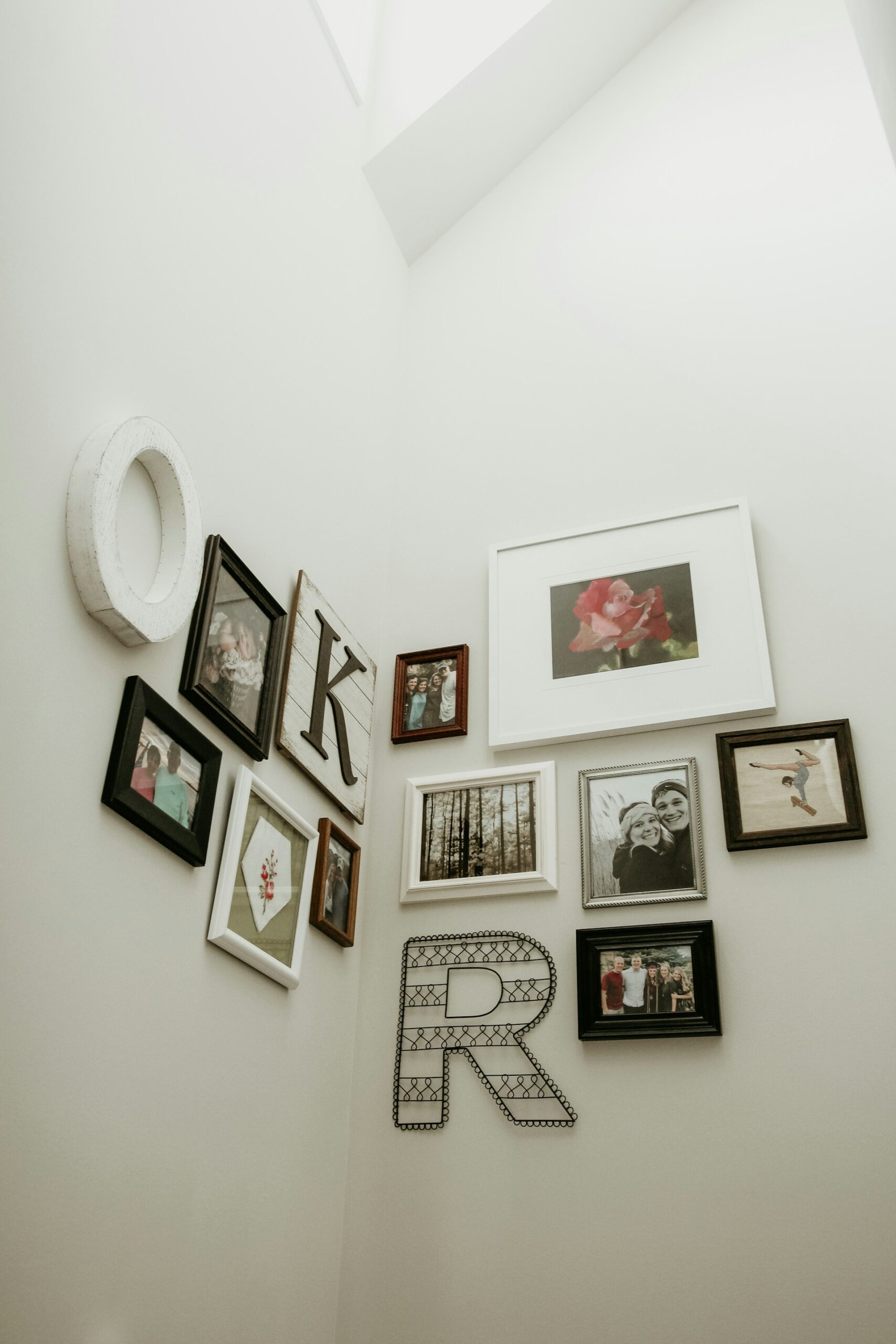
Photo by Alex Otto
Build a Gallery Wall
Gallery walls are a popular way to display holiday photographs because they allow you to combine different sizes and orientations. Before putting anything on the wall, lay your frames on the floor and experiment with arrangements. Start with the largest piece as an anchor, then build around it with smaller images.
Keep spacing consistent for a tidy look. If you prefer a more relaxed style, mix landscape and portrait formats, but maintain a shared element such as frame colour or print tone. For rented homes, picture ledges are a useful alternative, as they let you swap images around without making lots of holes in the wall.
In a minimalist interior, one or two carefully chosen photographs can have more impact than a wall filled with competing images. Find more tips in my guide to practical things every minimalist home needs.

Photo by Michael Oxendine
Match Photos to the Room
Different rooms call for different kinds of images. In a bedroom, choose peaceful scenes that encourage rest: misty mountains, quiet lakes, soft skies, or gentle coastal views. In the kitchen or dining room, food markets, café tables, vineyards, or sunny terraces can create a sociable atmosphere.
Hallways and staircases are perfect for storytelling. A series of holiday moments placed along a route through the home can feel like a journey in itself. In a home office, choose images that inspire you, perhaps a favourite city, a mountain path, or a place you dream of returning to.
Let Your Photos Work With Your Interior
Personal photographs do not have to clash with your existing décor. Editing can help create a cohesive look. Converting images to black and white is a classic option, particularly for portraits and street photography. It removes distracting colours and gives photos a timeless quality.
You can also adjust brightness, contrast, and cropping to make images feel more balanced. A busy beach scene, for example, might become stronger when cropped around a single figure or detail. Subtle editing can turn casual snapshots into artwork while still preserving the memory behind them.
Don’t feel that every photograph needs to match the colour palette of the room. A personal image can introduce a contrasting colour or a little visual unpredictability, particularly in an otherwise restrained interior.
The same principle applies when choosing frames and colours: personal photographs don’t have to match every element of a room, but they should feel considered alongside the surrounding furniture, materials and textures. For more inspiration, see these European interior design ideas.
Let Your Home Evolve With Your Travels
One of the joys of using personal photos as décor is that your home can evolve with your life. You do not need to display every favourite image at once. Keep a small archive of printed photographs and rotate them with the seasons, after new trips, or when you redecorate.
Summer holiday images can brighten your home during winter, while snowy landscapes may feel magical in December. Changing your displays keeps familiar rooms feeling fresh and gives older memories a chance to be enjoyed again.
A Home Filled with Stories
Travel photographs are reminders of places, but also of the people we were with and the way a particular moment felt. Bringing a few of those images into your home gives them a life beyond the camera roll and allows them to become part of the space around you.
You don’t need a wall covered in photographs. One beautifully printed image, a small collection on a picture ledge or a carefully arranged gallery can be enough. The most successful displays are the ones that feel personal rather than overly styled — photographs that make you stop for a moment and remember where you were.