
There is a specific kind of magic in a European long weekend—the way the light hits a cobblestone alley in Paris or the misty morning glow over the canals of Ghent. But as any creative traveller knows, capturing those fleeting moments requires more than just being in the right place at the right time; it requires a thoughtful approach to what’s in your bag. Whether you’re a film enthusiast or a digital devotee, having a curated travel photography kit is the difference between coming home with a cluttered camera roll and a collection of frames that truly tell a story. Here is my essential checklist for a seamless, well-equipped photography adventure.
Camera
The first thing you need is a camera. This will fully depend on you and what you like to use, meaning it can be anything from one of the many digiDirect compact cameras, to an old-school film camera.
On that note, if you will be using a film camera, be sure to have a lot of extra film on hand. It can be difficult to find old films in a new country, especially if you don’t know where to look.

Photo by Pexels
Memory Cards
If you are using a digital camera, you should travel with a few backup memory cards. Firstly, you may not be travelling with your laptop or an external hard drive, and the last thing you want is to run out of space for photos.
Additionally, you can easily lose, misplace, or corrupt memory cards, and while losing the photos will be annoying, it will be worse if you don’t have an extra memory card or two to retake the photos.
Portable Battery Charger
Similar to running out of memory space, you don’t want to run out of battery power either. One of the first things you should pack is a camera battery charger and a few extra batteries.
Don’t forget: power outlets vary by country, so you’ll need a portable battery pack to power the battery charger.
Travel Tripod
Every photographer should have a travel tripod they take everywhere. Firstly, you won’t be steady all the time, and you don’t want to fill your camera with blurry photos that you don’t want to keep or use.
Secondly, there is a good chance you will want to be in some of the photos you take, and setting your camera on a tripod makes it easy to take photos and be in them at the same time.
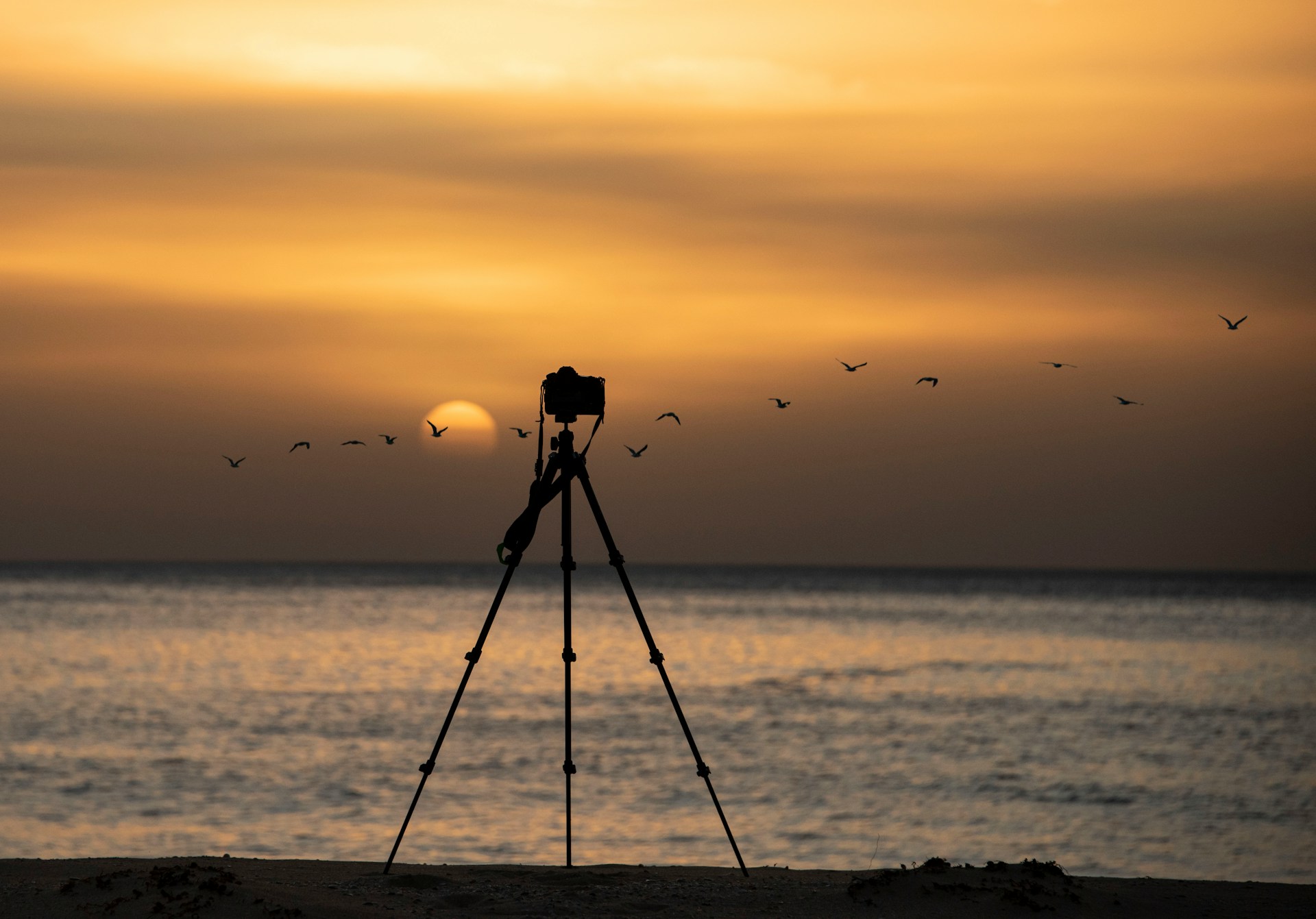
Photo by Trevor McKinnon
Portable Gimbal
If you are someone who wants to do some filming, whether you are using a camera or a smartphone, you want to invest in a gimbal. In simple terms, a gimbal is a device that keeps your camera steady even if you are moving, swaying, being bumped, etc.
This means you can easily film while walking on your journey, and get movie-quality footage without much gear. While gimbals can be expensive, they are well worth the investment if you are planning on doing a lot of filming.
Rain Cover
European weather can be very unpredictable, and rain is far more common than you may think, no matter the season. Because of this, you need to protect your camera and gear with a rain cover.
Be sure to get one that doesn’t just cover the camera, as your tripod, gimbal, etc., can all get wet and potentially rust depending on the materials the gear is made of.
Cleaning Kit
Keeping your camera and gear clean is essential. You have most likely invested a lot of money in what you own, and the last thing you want is a little dirt, dust, or moisture to get into your gear and ruin it. This is especially true for your lenses, which can be permanently damaged by the smallest speck of grit.
A cleaning kit is a must, and while it doesn’t have to be massive or extensive, there are a few essentials you need. A microfiber cloth, a soft brush, and a lens and camera spray will typically be enough to keep your camera clean while travelling.
Camera Backpack
You obviously can’t carry all this gear by hand or in a small tote bag, which is why you need a great camera backpack. While a regular backpack can work, one designed for camera gear offers better extras.
There are specific, soft pockets for delicate lenses, a secure spot for your camera, and often include specific pockets that can hold extras like tripods, lights, etc.
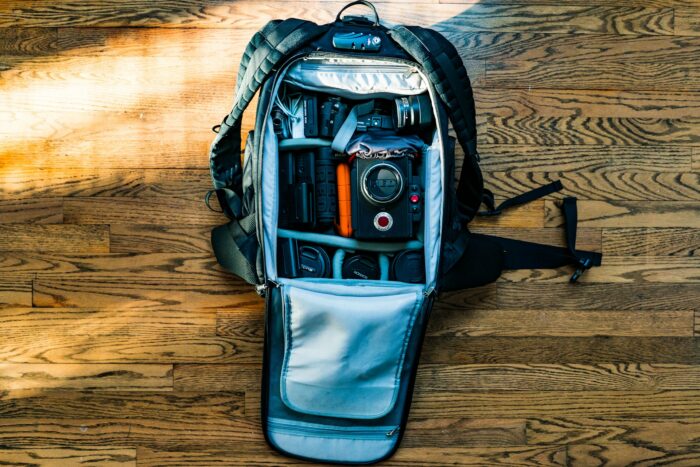
Photo by Skye Studios
Offline Maps
While not camera gear, it is always useful to save or print offline maps when travelling and when you want to photograph specific buildings, sites, etc. Some countries don’t have the best signal coverage, so you might get somewhere and not know where to go.
At the very least, you will be able to find the spots you want to photograph and not miss out on locations you have potentially travelled to see.
While having the right kit is vital, mastering how to use it in changing environments is just as important. For a deeper dive into technique, I always find the travel photography tutorials at Digital Photography School incredibly helpful for sharpening my skills on the road.
In conclusion, this list covers almost all the gear you need to take the most beautiful photos or film footage, no matter where you are or what you are doing. Once again, while this gear can be expensive, it is all worth the investment if taking photos is a passion of yours.








[…] dramatic landscapes around Colca Canyon. If you’re planning to photograph your journey, my travel photography checklist covers the essential gear to take on the […]
[…] you’re a travel photographer or someone who loves exploring cities, the start of a cruise can actually be one of the most […]