Most people picture a Tenerife holiday as a sun lounger, the Atlantic in front of you, a plate of tapas on the table and a cold Spanish beer within reach. Lovely, and I won’t argue. But the moments that stay with you are usually the ones that pull you out of your routine, and few do that better than paragliding in Tenerife.
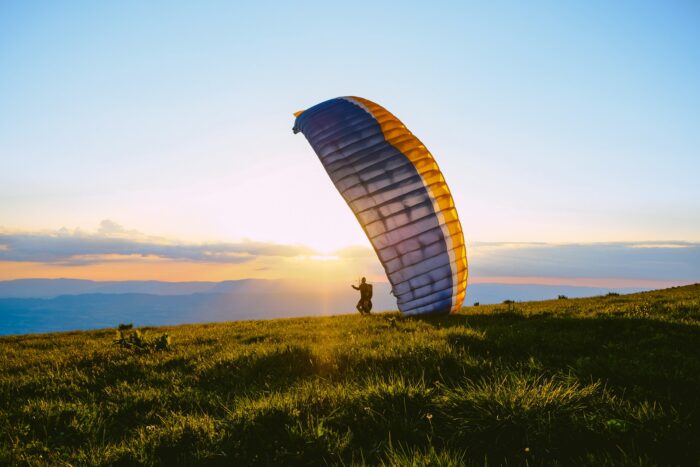
Photo by Juliette G.
Up in the air, the mind goes quiet and worries tend to drift away. You are simply there, in the moment, which is why travellers all over the world want to try it at least once.
Tenerife, the largest, highest and most populous island of Spain’s Canary archipelago, is a brilliant place to do it. Thanks to the mild climate, the constant winds and the sheer scale of its volcanic terrain, it’s easy to see why so many people choose to paraglide in Tenerife every year as the highlight of their trip.
Why a flight is good for the head as well as the holiday
Everyday life is noisy, and that stress takes a toll on both body and mind. Tandem paragliding is a proper disconnect. Once you lift off and the wing settles into the thermal current, many people feel a rush followed by a calm that is hard to find on solid ground. Watching the mountains slope down towards the Tenerife coast from a bird’s-eye view also changes how you think about your own courage. Whether you travel solo, with friends or with family, that boost of confidence tends to last long after you’ve landed.
What a tandem flight is really like
If you’ve never tried it, the doubts are normal. Do you need to be fit? Is it complicated? Honestly, no. Tandem paragliding needs no experience and no special preparation. You are attached by an approved harness to a certified instructor pilot, who looks after the technical handling, the navigation and the safety manoeuvres.
It is also not skydiving, so there is no leap into the void. Takeoff is a short run down a sloping hillside until the wing fills with air and lifts you gently off the ground. Once you’re up, it feels a bit like sitting on a floating balcony: smooth, quiet and free of sudden jolts.
Landing is controlled too. It happens at low speed, usually on a sandy beach or a clear area prepared for the purpose.
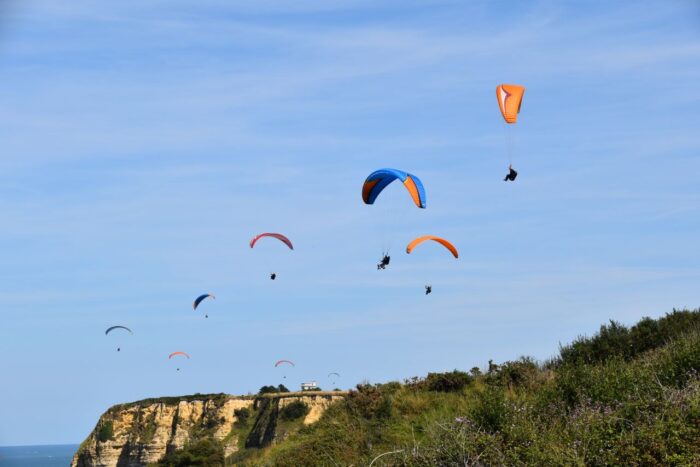
Photo by JacLou-DL
Where to go paragliding in Tenerife
The island’s volcanic landscape gives you different takeoff points depending on altitude, flight length and the day’s weather. Each one gives you a different view of Tenerife, from sunny southern ravines to high mountain terrain, so it’s worth knowing the options before you book. Your operator will usually choose the takeoff for you on the day, based on the wind, but it helps to know what to ask for. These are the three to know.
Taucho (Adeje)
At around 800 metres, Taucho is the most popular starting point on the island, and it’s easy to see why. Expect a smooth flight of about 15 to 20 minutes over arid landscapes and the ravines of Costa Adeje, with the coast opening up beneath you as you drift towards the sea. The altitude is modest and the pace is gentle, which makes it a good first taste of flying.
It’s the one I’d suggest for beginners and families, and it ends with a landing on La Enramada beach, in La Caleta. Finishing on sand, with your feet in the south of the island and a seafront nearby, is a lovely way to bring a flight to an end.
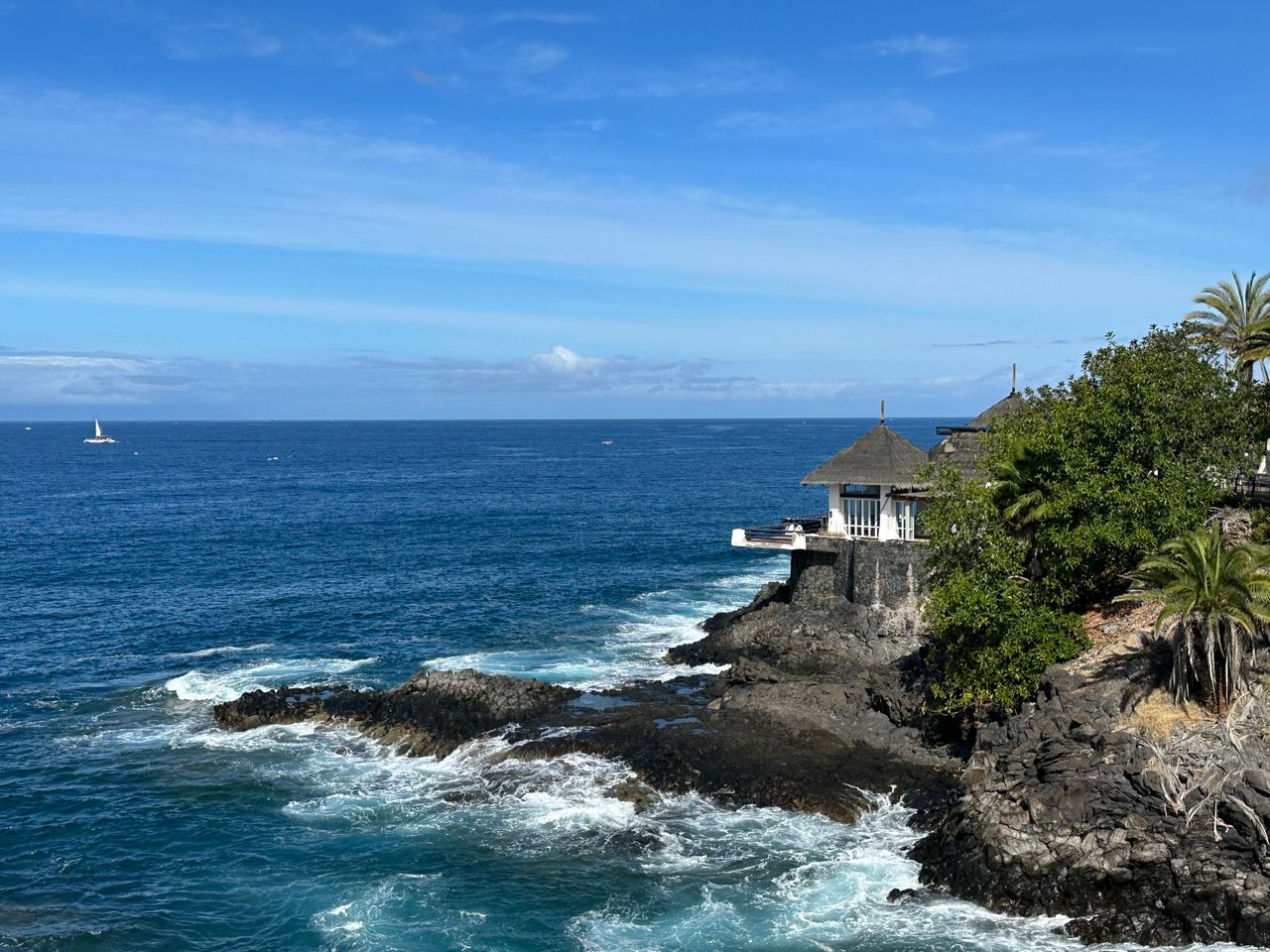
Photo by Sergei Gussev
Ifonche
Ifonche takeoff sits at roughly 1,100 metres above sea level, a step up from Taucho. That extra height gives you longer thermals and more time in the air, so you can stay up for 20 to 40 minutes.
The views are the reward: the famous Barranco del Infierno and the rock formations of the island’s south, seen from above rather than from a walking trail. If Taucho is the gentle introduction, this is the one for anyone who wants a longer, slower look at the landscape.
Izaña
This is the bold one. Izaña, at 2,200 metres in Teide National Park, offers one of the biggest drops you’ll find in Europe, according to local operators. The flight lasts 30 to 45 minutes, starting on the slopes of Las Cañadas caldera. Depending on the winds, you land either in Puerto de la Cruz on the north coast or in El Puertito de Güímar on the east coast. On the way down, you get one of the most striking aerial views in the Atlantic.
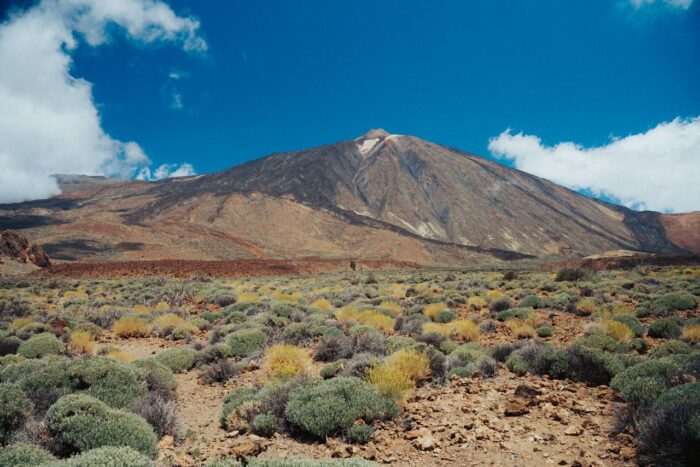
Photo by Benni Fish
How to organise your flight
A few practical things will make the day smoother, safer and far more enjoyable.
Book ahead
Plenty of visitors come to Tenerife with paragliding already on their list, so demand is high, especially in high season. Book with a specialised local company before you travel to avoid missing out.
Fly early in your stay
Paragliding depends entirely on the wind. Conditions are usually favourable for most of the year, but I’d still schedule your flight in the first few days of your trip. If the weather isn’t right on the day, you’ll have room to rebook.
Dress for altitude
It may be warm on the beach, but the temperature drops noticeably at takeoff and in the air, thanks to altitude and wind. Wear closed sports shoes or light hiking boots with good ankle support, long trousers and a windproof jacket or light coat. Bring sunglasses too. Not sure how to fit it all in? My tips for packing light can help.
Check the transport
Most specialised companies and local operators include transfers from a meeting point or your accommodation to the takeoff zone, and back again after landing. That means no wrestling with mountain roads.
Capture the memory
Instructors often offer optional high-definition photos and video, filmed on cameras mounted on extension poles. Take them up on it and put your phone away, so you can look at the scenery instead of a screen. If you’d still like to take your own shots on the ground, my travel photography tips for complete beginners will help you get more from the landscapes around you.
Collect stories, not just photos
For me, travel is about collecting stories to tell when you get home, the kind you keep long after the tan fades. A flight over the landscapes of Costa Adeje is one you won’t regret. Tenerife already has sun, good food and lovely beaches, but its skies are where you can quietly leave an old fear behind.
Book early, leave room for a long lunch afterwards, and tell me in the comments which takeoff point you’d pick.
If you’re stretching your trip across the archipelago, my guides to exploring Lanzarote and the best places to visit in Gran Canaria are good next stops.